Best drop-offs to fish on Lake Nipissing
There’s nothing quite like the frustration of heading out onto a vast body of water like Lake Nipissing, only to feel completely lost when it comes to finding fish. You know the fish are somewhere, but without understanding their preferred habitats, you might as well be fishing in a bathtub. This guide is dedicated to helping you unlock the secrets of Lake Nipissing’s most productive structures: its drop-offs, providing you with the knowledge to confidently target these fish-holding hotspots.
The Allure of Lake Nipissing Drop-Offs for Fish
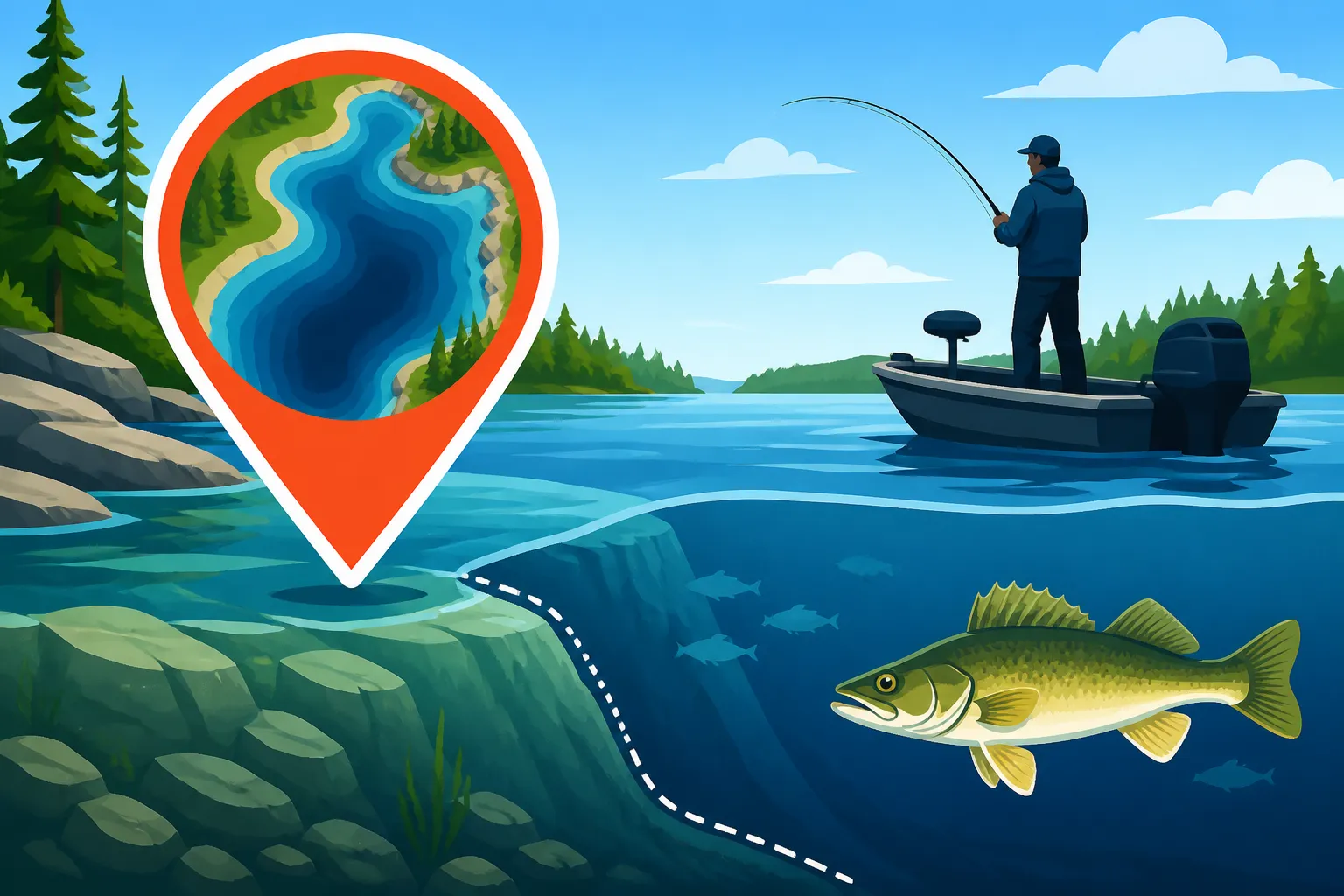
When we talk about drop-offs on Lake Nipissing, we're really talking about transitions – places where the lake bottom changes depth abruptly. These aren't just random underwater cliffs; they are vital highways and feeding grounds for nearly every major game fish species in the lake. Think of them as the underwater equivalent of a bustling downtown core, or perhaps a busy highway interchange, where everything converges.
The Magnetic Pull of Structure for Fish
Fish, being cold-blooded creatures, are incredibly sensitive to their environment. Factors like water temperature, oxygen levels, light penetration, and the availability of food and shelter all dictate where they choose to spend their time. Drop-offs often provide a perfect confluence of these elements, making them irresistible to fish. On one side of the drop, you might have shallower, warmer water, perhaps with some weed growth, offering cover and a place for baitfish to congregate. On the other side, the deeper, cooler water provides a refuge from harsh sunlight, stable temperatures, and escape routes from predators. This creates an ideal edge habitat where fish can ambush prey moving between the shallow and deep zones.
Moreover, the sharp change in depth often means a change in bottom composition – maybe rocky rubble on the shelf, transitioning to soft mud in the basin. This varied substrate can hold different invertebrates and baitfish, adding to the buffet for predators. When you find these areas, you're not just finding a depth change; you're finding an entire ecosystem compressed into one highly active zone. It's no wonder that experienced anglers often spend the majority of their time meticulously working these edges.
Seasonal Movements and Drop-Offs
The importance of drop-offs on Lake Nipissing isn't static; it shifts throughout the year, driven by the changing seasons and the corresponding needs of the fish. Understanding these seasonal patterns is key to maximizing your success. In the spring, after the ice recedes, many species, especially walleye, will congregate near shallow spawning grounds. As they recover from spawning, they often move to the shallower edges of drop-offs adjacent to these areas, seeking warmth and abundant baitfish. The warming waters push bait into these shallower zones, and the walleye are right there to capitalize. This is a prime time for targeting them on the subtle breaks leading into deeper water, especially as they move between feeding in the shallows and resting deeper.
As summer progresses, the lake stratifies, meaning warmer water sits atop cooler, deeper water. Fish like pike and bigger walleye will often retreat to the cooler depths, using drop-offs as vertical migration routes. They might hang out in 25-30 feet of water during the day, then move up to 10-15 feet during low-light periods to feed. The drop-off acts as their ladder. During the fall, as the lake begins to cool, baitfish once again push into shallower waters, often concentrating along these same drop-off edges. Predator fish follow suit, aggressively feeding to fatten up for winter. This pre-winter bite along drop-offs can be absolutely phenomenal. Even during ice fishing season, the deep edges of drop-offs continue to be crucial, offering fish access to warmer, more stable water and a steady supply of deep-water forage. Knowing when and where to find fish on Lake Nipissing requires a good understanding of these seasonal movements, which you can often anticipate by familiarizing yourself with the broader Ontario Fishing Seasons by Zone and Month.
Identifying Prime Drop-Off Locations on Nipissing
Lake Nipissing is a truly unique fishery. While it's relatively shallow for its size, covering nearly 870 square kilometers, it still boasts numerous compelling drop-off zones that are absolute magnets for fish. You won't find abyssal trenches here, but rather subtle yet significant depth changes that concentrate fish activity.
Understanding Nipissing's Unique Geography
Nipissing's vast, saucer-shaped basin means that true deep water, generally 40 feet or more, is somewhat limited to certain areas, often in the central and western parts of the lake. However, what it lacks in extreme depth, it makes up for in productive structural diversity. You'll find countless shoals, submerged humps, weed flats, and rocky points that all feature some kind of drop-off into slightly deeper water. These aren't just sharp, straight lines; they can be gradual slopes, stair-step ledges, or dramatic underwater cliffs. The beauty of Nipissing is that even a 5-foot drop-off in 15 feet of water can be an absolute honey hole if it's got the right combination of cover and bait. Understanding that these more subtle depth changes are often what we're looking for, rather than canyon-like drops, is critical on this lake.
Many of Nipissing's most productive areas, like Callander Bay, South Bay, and the areas around the Manitou Islands, are essentially vast, shallower basins that feature numerous humps and ridges. The edges of these humps, where they drop into the surrounding slightly deeper water, are prime examples of the kind of "drop-offs" you should be targeting. It's these transitions from a few feet deeper to another handful of feet deeper that consistently hold fish.
Key Drop-Offs to Target
While I can't give you exact GPS coordinates for secret spots (a good angler finds those themselves!), I can point you towards general areas on Lake Nipissing known for productive drop-offs. One of the most famous is the South Bay area. This large bay, south of the main lake, is dotted with numerous shoals and reefs that drop into depths of 20-30 feet. The transitions from the shallow tops of these structures to the deeper surrounding basin are prime walleye and pike territory. Similarly, the Manitou Islands region in the central part of the lake is another hotspot. The various islands and submerged reefs create significant contour changes, offering abundant drop-offs that consistently hold fish. For instance, the edges where a shallow reef near Commanda Island plunges into the deeper channel can be fantastic.
Another area to consider is the West Bay and the vast stretch of open water towards the mouth of the Sturgeon River. While much of this is shallow, there are distinct channels and subtle humps that drop from 10-15 feet down to 20-25 feet. These seemingly small changes are crucial. Many anglers focus on the North Bay area too, especially the channels and edges around the islands that separate it from the main lake. It often pays to consult a detailed fishing map, or better yet, book a local guide through platforms like FishingBooker who can show you some of these nuances firsthand and significantly cut down your learning curve on this immense water body. Remember, the key isn't just finding a drop-off, but finding one that has other appealing features like rock piles, weed edges, or current breaks. This often requires a combination of good mapping and diligent on-the-water exploration.
Tools for Pinpointing Submerged Edges
In today's age, fishing isn't just about a rod and reel; it's also about technology, especially when you're trying to dissect a lake bottom. A high-quality fish finder is absolutely non-negotiable for effectively fishing drop-offs on Lake Nipissing. Modern units from brands like Humminbird or Lowrance come equipped with high-definition sonar, down imaging, and side imaging, allowing you to not only see the depth change but also the exact composition of the bottom, individual fish, and even baitfish schools clinging to the edge. You can literally "see" a rock pile nestled right on a break or a distinct weed line where the depth changes. Many anglers find that spending time simply cruising and marking potential spots on their GPS before even dropping a line is the most productive use of their day.
Beyond sonar, high-definition lake maps are your best friend. Navionics and LakeMaster are two popular options that provide incredibly detailed bathymetric charts, showing contours down to one-foot intervals in many areas. These maps allow you to identify potential drop-offs from the comfort of your home, marking waypoints to explore on the water. Coupling your GPS-enabled fish finder with these detailed maps means you can precisely position your boat along the contour, whether you're trying to fish the 15-foot line, the 20-foot line, or the very edge of the deepest water. Without these tools, finding and staying on a productive drop-off on a lake as vast as Nipissing would be akin to finding a needle in a haystack. For more on what to look for, check out our guide on the Best Fish Finders for Ontario Lakes.
Tactics for Fishing Lake Nipissing Drop-Offs
Once you've located a promising drop-off, the next step is to present your bait or lure in a way that entices a strike. This isn't a one-size-fits-all approach; successful drop-off fishing on Lake Nipissing involves thoughtful lure selection, precise boat control, and understanding the specific species you're targeting.
Choosing the Right Presentation
Fishing a drop-off effectively requires your lure to spend as much time as possible in the strike zone, which is often right on or immediately adjacent to the depth change. This means lures that can be worked vertically or parallel to the contour are often highly effective. Jigging is a go-to technique, especially for walleye. Using a jig head tipped with a minnow, a soft plastic, or a worm, you can bounce it along the bottom as you drift or slowly motor along the edge. The weight of the jig allows you to maintain bottom contact even in deeper water or light current, while the retrieve mimics an injured baitfish.
Another excellent method is trolling. This allows you to cover a lot of ground and determine where the fish are holding along a longer drop-off. Crankbaits, especially those designed to dive to specific depths, are perfect for this. You can adjust your line length and lure choice to keep your bait running right at the desired depth, whether that's 10 feet, 15 feet, or 25 feet, right along the edge of the break. Trolling with bottom bouncers and worm harnesses is also incredibly effective, especially when walleye are scattered along the contour. For more specific insights, you might find our guide on Best Tackle for Ontario Walleye helpful. Don't forget live bait presentations, particularly on a slip-float or bottom-rigged, which can be deadly when fish are less active.
Species-Specific Strategies
While drop-offs are universally good, the best way to approach them often varies depending on what you're hoping to catch.
- Walleye: These beloved "pickerel" often relate directly to the bottom or just above it on the deeper side of a drop-off, especially during the day. They're light-sensitive, so they'll use that deeper water as a refuge. Vertical jigging with minnow-tipped jigs (like a 3/8 to 1/2 oz Fin-S Fish jig), slow trolling with deep-diving crankbaits (think Rapala Deep Tail Dancers or Berkley Flicker Shads), or dragging worm harnesses are all highly effective. They'll often school along these breaks, so if you catch one, there are usually more. Timing can be critical for walleye, so understanding the Best Time of Day to Catch Walleye can give you an edge.
- Northern Pike: Pike are often found on the shallower side of the drop-off, especially if there's weed growth or cover, but they'll use the entire break to ambush prey. Large spoons, spinnerbaits, and swimbaits cast parallel to the drop-off or trolled along it can be deadly. Pike are opportunistic predators, so don't be afraid to use aggressive retrieves. If you're specifically targeting bigger pike, look for the areas where the drop-off also features submerged timber or dense weed beds, as these offer perfect ambush points. For more detailed tactics, check out How to Catch Northern Pike in Ontario.
- Muskellunge: These apex predators will patrol the edges of significant drop-offs, especially those near expansive weed flats or rocky reefs. Trolling large bucktails, crankbaits, or glide baits along the deeper edge of a drop-off is a common strategy. Casting large baits into the shallower water on top of the drop-off and working them down the face is also effective. Muskie often relate to large baitfish schools that congregate around these structures. They might be solitary, but if they're there, they're usually hunting. For specialized gear, refer to our Best Muskie Gear for Ontario Waters guide.
- Yellow Perch: While often found in shallower weed beds, larger perch will also use the edges of drop-offs, particularly those with a softer, muddier bottom where they can find invertebrates. Small jigs, drop-shot rigs, or tiny spoons tipped with a piece of worm or a minnow will work wonders. These can be particularly good during late fall and ice fishing season when perch group up in deeper water.
Reading the Conditions
No two days on Lake Nipissing are ever truly alike, and successful drop-off fishing means adapting to the current conditions. Wind, for example, can be your friend or your foe. A gentle breeze pushing baitfish (and your boat) along a drop-off can create a fantastic drift, making it easy to cover water and present your lure naturally. However, a strong wind can make boat control a nightmare, blowing you off your desired contour line. This is where a good bow-mount trolling motor with GPS capabilities (like a Minn Kota Terrova or Ulterra) becomes invaluable, allowing you to "anchor" electronically or follow a contour automatically.
Water clarity also plays a significant role. In clearer water, fish might hold a bit deeper on the drop-off, or require more subtle presentations. In stained or turbid water, they might move shallower or respond better to noisier, more vibrant lures. Barometric pressure changes, often associated with approaching cold fronts, can make fish lethargic and push them deeper into the most stable part of the drop-off, requiring a slower, more methodical approach. Conversely, stable high-pressure systems after a front can spur an aggressive bite. Always pay attention to what the fish are telling you on any given day.
Navigating Lake Nipissing for Drop-Off Success
Lake Nipissing is a large, open body of water that demands respect. While the fishing can be incredible, neglecting proper navigation and safety can quickly turn a great day into a dangerous one.
Safety Considerations on Large Waters
First and foremost, never underestimate the power of Lake Nipissing. Its size means it can get very rough, very quickly, especially with strong winds. Always check the weather forecast before heading out, and be prepared for changing conditions. Heavy chop can make navigating difficult, not to mention trying to fish a precise contour. Ensure your boat is properly equipped with all required safety gear, including enough life jackets for everyone on board, a first-aid kit, bailing device, signaling devices, and a fully charged cell phone or marine radio. Make sure you understand Ontario Boating Laws for Anglers. It’s also a good idea to tell someone on shore your float plan – where you’re going and when you expect to return.
Beyond weather, navigation itself requires attention. Even with modern GPS, it's wise to carry a paper map of Lake Nipissing as a backup, and always be aware of your surroundings. There are numerous shoals, rocky areas, and submerged hazards, especially around islands and shorelines. If you're unfamiliar with an area, proceed with caution and keep an eye on your depth finder. Consider the size and capability of your vessel; a small aluminum boat might be perfect for sheltered bays but could be risky in open water during a blow. For more on boat selection, consult Best Boats for Ontario Lakes and Rivers.
Leveraging Technology for Navigation
As mentioned earlier, your fish finder and GPS are your absolute best friends for fishing drop-offs. But it's not just about finding the drop-off; it's about staying on it. Modern GPS units allow you to mark waypoints precisely and even record tracks. This means if you find a productive stretch of a drop-off, you can save it and return to it later. More advanced units allow you to create custom contour maps in real-time or utilize auto-charting features, providing unparalleled detail of the lake bottom.
When you're actively fishing a drop-off, especially in a boat, boat control is paramount. A good bow-mount electric trolling motor, especially one with GPS Spot-Lock or i-Pilot (from brands like Minn Kota or MotorGuide), is a game-changer. These motors can hold your boat precisely on a spot, or follow a pre-set contour line, freeing you up to focus on fishing. This is incredibly valuable when you're trying to work a jig down a specific depth break or slowly troll a crankbait exactly along a contour. Without this level of control, maintaining your position on a drop-off, especially in wind or current, becomes a constant battle, making effective lure presentation nearly impossible. This combination of detailed mapping, precise GPS, and hands-free boat control is what elevates a good angler to a great one when it comes to consistently catching fish on Lake Nipissing's hidden edges.
Drop-Off Fishing Table for Lake Nipissing
To help you visualize how different species might relate to drop-offs on Lake Nipissing, here's a quick summary:
| Species | Preferred Drop-Off Depth (Shallow Edge) | Typical Depth (Deep Edge) | Key Features to Look For | Recommended Lures/Baits |
|---|---|---|---|---|
| Walleye | 10-15 ft | 20-35 ft | Rocky bottoms, subtle humps, transition to soft bottom | Jigs (minnow/plastic), worm harnesses, deep crankbaits |
| Northern Pike | 5-15 ft | 15-25 ft | Weed lines, submerged timber, rocky points | Spinnerbaits, spoons, swimbaits, large minnows |
| Muskellunge | 8-20 ft | 25-40 ft | Large reefs, expansive weed edges, deep basin access | Large bucktails, glide baits, deep-diving crankbaits |
| Yellow Perch | 8-12 ft | 15-20 ft | Muddy flats, subtle breaks near weed beds, current breaks | Small jigs (tipped), drop-shot, tiny spoons (ice fishing) |
Final Thoughts on Mastering Lake Nipissing's Drop-Offs
Fishing Lake Nipissing's drop-offs is truly one of the most rewarding ways to target its diverse fish populations. It requires a blend of preparation, technology, and on-the-water intuition. Don't get discouraged if you don't find fish on every single drop-off you investigate. Like any good detective, you'll need to piece together clues: the time of year, the weather, the bait presence, and the subtle nuances of the underwater terrain. Take the time to study your maps, learn your electronics, and practice your boat control.
Remember, every time you’re out there, you're learning. Keep a fishing log, note what worked (and what didn't), and slowly but surely, you'll build up a mental library of productive spots and patterns. Whether you're chasing the famed walleye of South Bay or hunting a trophy muskie near the Manitou Islands, those critical depth transitions are where the action often happens. So, gear up, hit the water, and start exploring those hidden underwater highways. Who knows, you might just find your next secret spot! And if you're looking for local expertise, remember that guides found through services like FishingBooker can offer invaluable insights into specific hot spots and techniques for different species on the lake.
Disclaimer
The information provided in this guide is for general informational purposes only and is not a substitute for consulting official Ontario fishing regulations. Anglers are responsible for knowing and adhering to all current rules, including licensing requirements, season dates, and catch limits for the specific Fisheries Management Zone they are fishing in. Always prioritize safety on the water and be aware of changing weather conditions.