Best jumbo perch spots on Lake Simcoe
Oh, the quest for jumbo perch on Lake Simcoe! If you've ever spent a chilly morning on the ice, shivering through numb fingers, only to reel in one tiny perch after another, you know the frustration. It feels like those truly massive, plate-sized perch are just figments of our fishing dreams, doesn't it? But trust me, they're out there, and with a little local knowledge and the right approach, you can absolutely put some serious slabs in your bucket. This guide is all about cutting through the noise and pinpointing those prime locations and tactics that will help you find those elusive Lake Simcoe jumbo perch.
Understanding Lake Simcoe's Jumbo Perch Fishery
Lake Simcoe is renowned across Ontario, and indeed North America, for its incredible ice fishing opportunities, particularly for yellow perch. What makes this lake so special for perch is its diverse habitat, abundant forage, and excellent water quality. It's a large, relatively shallow lake with numerous bays, points, and islands that create perfect environments for perch to thrive and grow to impressive sizes. We're talking about perch that can push past the 12-inch mark, sometimes even hitting 14-15 inches – true jumbos that are a blast to catch and even better on the dinner plate.
The sheer size of Lake Simcoe, covering over 722 square kilometers, means there's a lot of water to cover, and finding the "right" spot can feel like searching for a needle in a haystack. Many anglers flock to popular access points, which can sometimes lead to overcrowded areas and pressured fish. But the secret to consistent success lies in understanding their movements and preferred habitats throughout the year, especially during peak seasons like ice fishing. Perch are schooling fish, so when you find one jumbo, there's a good chance others are nearby. However, these larger fish are often less willing to bite than their smaller counterparts, requiring a bit more finesse and patience.
Top Jumbo Perch Hotspots on Lake Simcoe
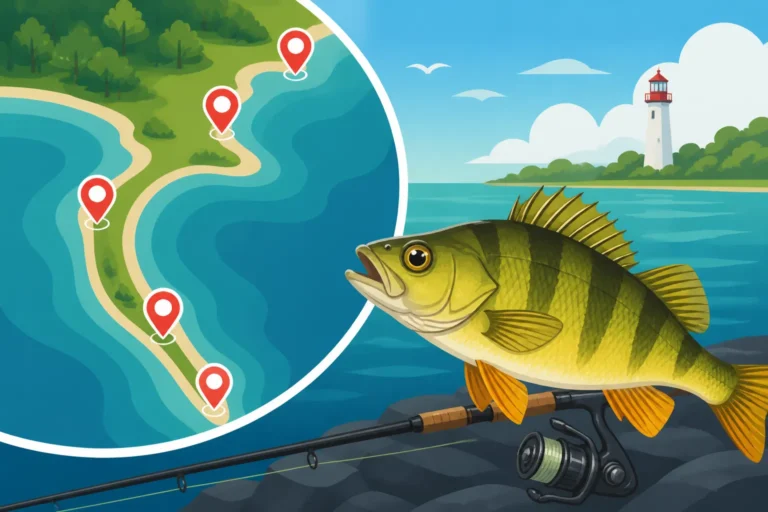
When it comes to targeting jumbo perch on Lake Simcoe, certain areas consistently produce bigger fish. These spots often combine a few key elements: proximity to deeper water, varied bottom structure, and access to food sources. While perch can be found almost anywhere, these particular locations are known for holding the larger specimens.
Cook's Bay
Cook's Bay, located on the southwestern arm of Lake Simcoe, is arguably one of the most famous spots for jumbo perch. This bay is relatively shallow and features extensive weed beds, which serve as excellent cover and feeding grounds for perch, especially in the early ice season and during open water periods. The vastness of Cook's Bay can be intimidating, but focusing on specific areas can pay dividends. Look for transition zones where the weeds meet deeper sand or mud flats. Areas around the mouth of the Holland River and near communities like Gilford and Lefroy are historically productive.
During the hardwater season, you'll see entire "perch villages" spring up on the ice here. However, don't just follow the crowds blindly. Often, the bigger fish will hold slightly away from the main pressure, perhaps on the edge of a large school of smaller fish. Exploring depths between 10 to 25 feet, particularly where you see slight variations in the bottom contour or lingering weed clumps, can lead to some impressive catches. Many anglers find success by drilling a series of holes and actively searching with their sonar before committing to a spot. If you're looking for an experienced hand to guide you to these exact honey holes, considering booking a local guide through a service like FishingBooker can save you a lot of time and guesswork, getting you straight to the action.
Kempenfelt Bay and Surrounding Points
Moving north, Kempenfelt Bay offers a completely different fishery. It's much deeper and more often associated with lake trout and whitefish, but don't count out its perch potential. The deeper, colder waters here can hold some incredibly large, healthy perch. The key is to target the shallower edges and points that drop off into the abyss. Places like Big Bay Point and De Grassi Point, on the western shore, and the points near Barrie, can be excellent.
These areas provide quick access to deep water where perch can retreat when pressured or seek comfort in stable temperatures. Focus on depths ranging from 20 to 40 feet, especially near humps, rock piles, or old submerged structures. Early and late ice, or even during open water, the perch will often move shallower to feed, but during the mid-winter lull, they might hold in these deeper staging areas. A good strategy here is to target prominent points or underwater islands. The perch often cruise these structures looking for baitfish. Remember that the Ontario Yellow Perch Limit on Lake Erie and Simcoe is important to know before you start your day.
The Island Complex: Snake Island, Fox Island, and Thorah Island
The cluster of islands in the middle of Lake Simcoe provides fantastic habitat for jumbo perch. Snake Island, Fox Island, and Thorah Island create numerous channels, shoals, and sheltered bays that are magnets for baitfish and, consequently, big perch. The waters surrounding these islands offer a mix of rocky bottoms, sand flats, and weed lines, providing everything a perch needs.
Areas between Snake Island and the mainland, particularly around the shallower humps and subtle breaks, are great places to start. The eastern side of Fox Island can also be very productive, especially if you can find some protected areas from the wind. These spots can be a bit more challenging to access, especially during open water, often requiring a boat, but the reward of less pressured fish can be worth it. On a crisp winter day, the ice roads often provide access to these larger central lake areas, making them accessible to a wider range of anglers. For a truly unique experience, consider exploring these more remote spots with a local charter found on FishingBooker, many of whom specialize in reaching these productive but less-fished areas.
Seasonal Strategies for Lake Simcoe Perch
Jumbo perch on Lake Simcoe behave differently throughout the year, so adapting your strategy to the season is crucial. What works in January might not work in May, and vice versa.
Ice Fishing Season (December to March)
This is prime time for Lake Simcoe jumbo perch, and when most anglers head out. Early ice (December to early January) is often a fantastic period as perch are actively feeding closer to shore in shallower depths (8-15 feet), often around residual green weeds. They're usually less pressured and more aggressive then. As the season progresses into mid-winter (late January to February), perch tend to move to deeper basin areas or hold tighter to underwater structure, like humps, rock piles, or drop-offs, often in 20-40 feet of water. This is when Jigging for Perch Through the Ice becomes a highly effective technique.
Late ice (March) can see a resurgence of shallower activity as fish begin their pre-spawn movements. They'll move towards shallower flats and bays again, fattening up before the spawn. Keep an eye on weather patterns; stable high-pressure systems are often the best time to fish, while strong cold fronts can make them finicky. For detailed access information, check out guides like Best Ice Fishing Access on Lake Simcoe to find specific entry points.
| Season | Typical Depths (Feet) | Preferred Habitat | Key Tactics |
|---|---|---|---|
| Early Ice | 8-15 | Weed edges, shallow flats | Aggressive jigging, active hole hopping |
| Mid-Winter | 20-40 | Deep humps, drop-offs, basin | Finesse jigging, deadsticking, sonar use |
| Late Ice | 10-25 | Pre-spawn staging areas, bays | Minnow presentations, lighter jigs |
| Spring (Open) | 5-15 | Spawning flats, shallow cover | Small crankbaits, jigs, live bait |
| Summer | 15-30 | Deep weed lines, offshore structure | Trolling, vertical jigging, slip bobbers |
| Fall | 10-25 | Transitional areas, points | Casting jigs, blade baits, minnows |
Open Water Season (April to November)
While ice fishing gets all the glory, the open water season also offers excellent opportunities for jumbo perch. In spring, shortly after ice-out, perch will be found in shallower bays and flats where they spawn. They're often very active and aggressive. As the water warms in summer, the biggest perch tend to retreat to deeper, cooler waters, often associating with the thermocline if one forms, or holding on deep weed lines, offshore humps, or structural elements in 15-30 feet of water. Trolling small crankbaits or casting jigs can be effective.
Fall sees perch becoming very active again as they feed heavily in preparation for winter. They'll often be found transitioning between shallower bays and deeper main lake structures. Vertical jigging over offshore humps, using small spoons or blade baits, can be incredibly productive during this time. Remember that Ontario Fishing Seasons by Zone and Month outlines the general periods for fishing various species across the province, but local conditions on Simcoe can vary.
Essential Gear and Techniques for Jumbo Perch
Having the right tackle and knowing how to present your bait makes a huge difference when targeting these finicky jumbos. They're often more wary than their smaller brethren.
Rods, Reels, and Line
For jumbo perch, a sensitive ultralight or light action rod is key. This allows you to feel those subtle bites that often characterize a large perch taking your bait. A 28-36 inch ultralight ice fishing rod with a quick tip is perfect for winter. For open water, a 6-7 foot ultralight spinning rod will do the trick. Pair it with a small spinning reel (500-1000 series) spooled with 4-6 pound test monofilament or fluorocarbon. Braided line can also be used, especially in deeper water for better sensitivity, but a 6-8 foot fluorocarbon leader (4-6 lb test) is essential for invisibility. You might want to refer to Best Spinning Rods for Walleye for similar considerations in rod action and sensitivity.
Baits and Lures
Live bait is almost always a winner for jumbo perch. Small minnows (shiners, emerald shiners), maggots, wax worms, and even small pieces of real worm are highly effective. For artificials, don't underestimate the power of tiny jigs and spoons.
- Jigs: Small tungsten jigs (1/32 to 1/8 oz) tipped with a maggot, wax worm, or a small plastic grub are deadly. Brands like Clam, VMC, and Northland offer excellent options. The subtle action of a small plastic tail or the scent of live bait can entice even the most hesitant perch.
- Spoons: Tiny spoons, often called panfish spoons or perch spoons, are fantastic. Think 1/16 to 1/8 oz in silver, gold, or glow colors. The flash and flutter can attract fish from a distance. The Acme Kastmaster and Swedish Pimple are classic choices, but many newer designs also excel. When it comes to specialized gear, Best Spoons for Ice Fishing Panfish can offer more insights.
- Blade Baits: Small blade baits (like a Silver Buddy or Rapala Rippin' Rap in micro sizes) can be very effective in deeper water, especially when perch are aggressive. The vibration and flash can trigger reaction bites.
Presentation is Everything
Often, jigging aggressively to attract fish is important, but once they show up on your sonar, a more subtle approach is usually needed to coax a jumbo into biting. Try these techniques:
- Deadsticking: Have one rod set up with a simple hook and live minnow suspended just off the bottom, perhaps 6-12 inches. Let it sit still, or just impart a very gentle quiver. Many jumbo perch will take a deadsticked minnow when they ignore a heavily jigged bait.
- Lift and Drop: This classic jigging technique involves lifting your jig a foot or two off the bottom and letting it flutter back down. Experiment with the speed and height of your lift.
- Finesse Quiver: With a small tungsten jig, simply hold it still and impart tiny, almost imperceptible quivers with your rod tip. Sometimes, the slightest movement is all it takes.
- Sonar Use: A good fish finder (like a Vexilar, Marcum, or Humminbird Ice Helix) is indispensable. It helps you find structure, see baitfish, and most importantly, mark individual perch. Watch how they react to your bait – are they ignoring it, chasing it, or just sitting below it? Adjust your presentation accordingly.
Local Insights and Angler Etiquette
Lake Simcoe is a heavily fished lake, especially in winter. Being a good steward of the resource and respectful of other anglers is paramount.
- Practice Catch and Release for Spawners: While catching jumbo perch is exciting, consider releasing some of the larger females, especially during their pre-spawn and spawning periods in spring. These are the future of the fishery. Always follow Ontario Bag and Possession Limits by Species.
- Respect Private Property and Access Points: Always ensure you have permission to access the lake through private land, or use designated public access points.
- Leave No Trace: Pack out everything you pack in, including bait containers, line scraps, and food wrappers. Littering degrades the environment and reflects poorly on all anglers.
- Support Local Businesses: When visiting Lake Simcoe, consider supporting the local bait shops, restaurants, and accommodations. They often have the most up-to-date information on conditions and fishing reports. If you're looking for a guided trip, companies often list their services on platforms like FishingBooker, providing a convenient way to support local expertise and ensure a productive day on the water.
Finding jumbo perch on Lake Simcoe is a rewarding challenge. It requires patience, adaptability, and a willingness to explore. But when that ultralight rod bends over and you feel the heavy thump of a true Simcoe slab, all the effort becomes worth it. Good luck out there!
Disclaimer
The information provided in this guide is for general informational purposes only and is subject to change. Always consult the official Ontario fishing regulations summary for the most current rules, limits, and season dates before heading out on the water. Fishing conditions and fish behavior can vary, and success is never guaranteed.