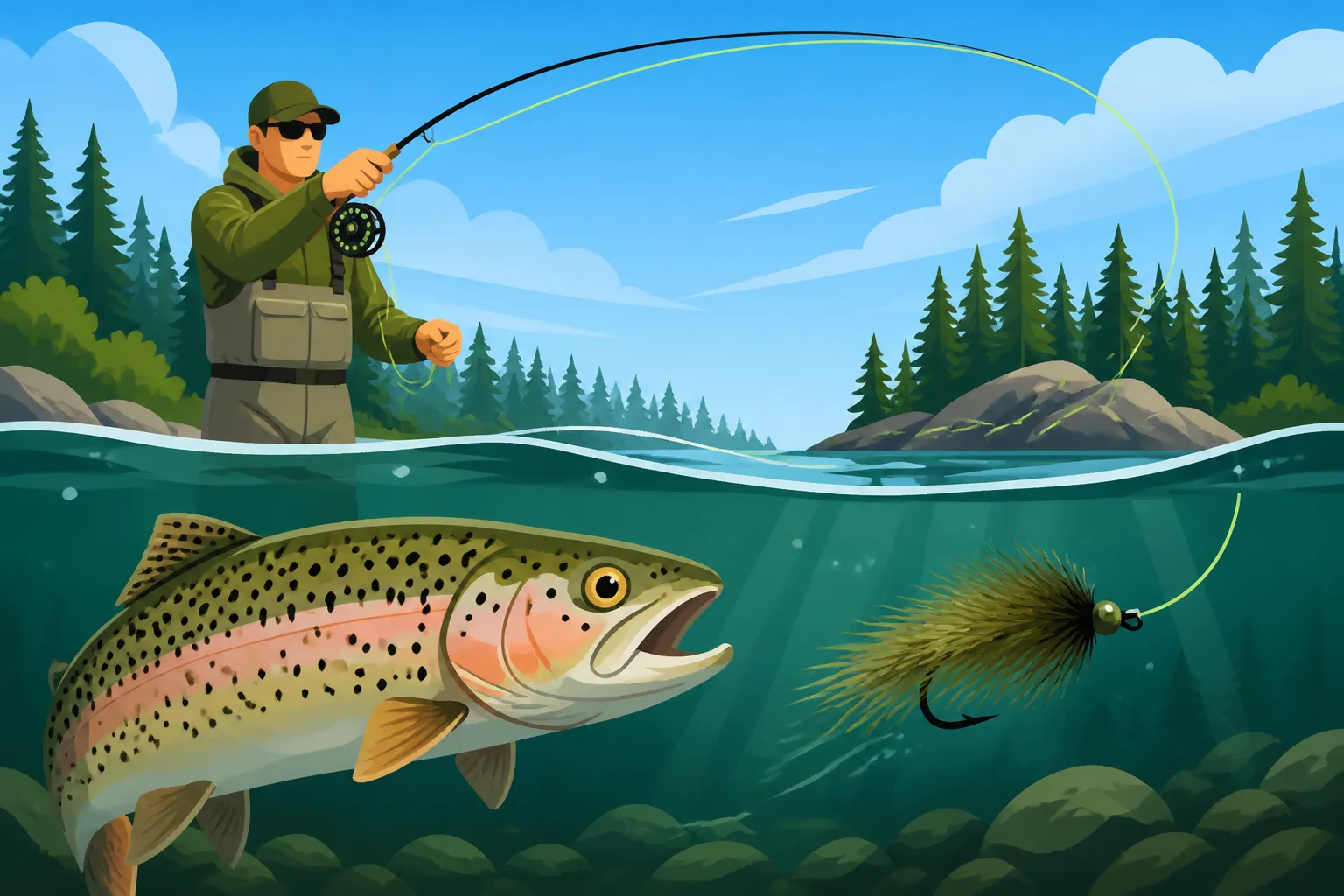
How to fish a wooly bugger for trout
You've been out on an Ontario river, casting delicate dry flies for hours, watching trout rise all around you, but they're just not interested in what you're offering. It's a frustrating situation many fly anglers face, feeling like you're speaking a different language than the fish. But what if I told you there's one fly pattern that often breaks through that communication barrier, a true workhorse that can salvage even the toughest days? This guide is going to walk you through exactly how to effectively fish a Woolly Bugger for trout across various Ontario waters, turning those frustrating days into rewarding ones.
Understanding the Versatility of the Woolly Bugger
The Woolly Bugger isn't just a fly; it's a legend. It's one of the most popular and versatile patterns in fly fishing for a very good reason: it simply works. If you only had one fly to fish for the rest of your life, many seasoned anglers would argue for the Woolly Bugger. Its effectiveness comes from its ability to imitate a wide array of trout forage, making it a universal meal ticket in almost any water condition.
What Makes It So Effective?
At its heart, the Woolly Bugger is a master of imitation, or perhaps, suggestion. It doesn't meticulously copy a single insect or baitfish; instead, it offers a general profile and irresistible movement that triggers a predatory response in trout.
Think about what trout eat: leeches, sculpins, dace, juvenile suckers, large aquatic nymphs, even crayfish. The Woolly Bugger, with its marabou tail, chenille body, and palmered hackle, embodies all these things in one fluid, pulsating package. The marabou tail breathes and undulates seductively in the water, even when barely moving, mimicking the swimming motion of a leech or a struggling baitfish. The hackle along the body adds bulk and a lifelike shimmer, displacing water and creating vibrations that fish can detect with their lateral lines. Its robust construction means it stands up to repeated abuse from aggressive trout, something you'll appreciate when you're on a hot bite. This combination of movement, profile, and subtle flash is what makes it an irresistible target, even for picky trout.
Different Styles and Colors
While the basic design remains consistent, Woolly Buggers come in a fantastic variety of sizes, weights, and colours, each designed for specific situations. This versatility is another key to its success.
When you're browsing for Woolly Buggers, either at your local fly shop or on an online retailer like Amazon, you'll immediately notice the color spectrum. Black is often a go-to, especially in darker or stained waters, imitating leeches or dark baitfish. Olive is arguably the most popular and versatile, mimicking everything from sculpins to larger nymphs. Brown is excellent for imitating crayfish or certain species of baitfish that have a more earthy hue. Don't forget white or chartreuse, particularly in murky water or when fishing for aggressive fish in low light conditions, as these can trigger reaction strikes.
Beyond color, consider the weighting. Many Woolly Buggers feature a bead head (a small metal bead at the front) or a cone head (a larger, cone-shaped weight). These weighted versions help the fly sink quickly into the strike zone and give it an enticing jigging action when retrieved. For shallower water or when you want a slower descent, you'll find unweighted versions. You might also encounter patterns tied with rubber legs, flash material, or even different types of hackle, each offering a slight variation on the classic. Matching the specific conditions you're fishing – water depth, clarity, and the type of forage present – with the right color and weight can dramatically improve your success rate.
Essential Gear for Woolly Bugger Fishing
You don't need highly specialized gear to fish a Woolly Bugger, which is part of its appeal. However, selecting the right rod, reel, and line will enhance your experience and effectiveness, especially in Ontario's diverse trout waters.
Rod, Reel, and Line Selection
Choosing the right setup is crucial for casting and effectively presenting these often heavier, bulkier flies.
For most trout fishing scenarios in Ontario, a 5-weight or 6-weight fly rod is an excellent all-around choice. These rods have enough backbone to cast a weighted Woolly Bugger with ease, yet are still sensitive enough to feel subtle strikes. If you're targeting larger trout in bigger rivers or lakes, or if you plan on throwing particularly large or heavily weighted Buggers, bumping up to a 7-weight rod might be beneficial. For smaller streams, a 3 or 4-weight might work, but you'll find casting the Bugger a bit more challenging.
Pair your rod with a matching fly reel that can comfortably hold your fly line and backing. While a high-end drag system isn't strictly necessary for most trout, a smooth drag is always a plus.
The fly line is perhaps the most critical component for casting a Woolly Bugger. A weight-forward (WF) floating line is the standard workhorse for trout fishing and will suffice for many situations, especially when fishing shallower water or dead-drifting. However, to get your Woolly Bugger down deeper and faster, particularly in currents or larger lakes, consider a sink-tip line or even a full sinking line. A sink-tip line has a short section of sinking line spliced into a floating line, allowing the fly to dive while the rest of your line stays on the surface for better mending and retrieve control. For maximum depth, especially in lakes or deep pools, a full sinking line will keep your fly in the strike zone longer.
Your leader should typically be 7.5 to 9 feet long, tapered down to a tippet size of 3X, 4X, or even 5X, depending on water clarity and trout size. A good rule of thumb is to use heavier tippet (like 3X) for larger, more aggressive trout and murkier water, and lighter tippet (like 5X) for smaller, more finicky fish in clear water. Consider a short section of fluorocarbon tippet as well; it's less visible underwater and sinks faster than monofilament. When you're fishing for Brook Trout in Ontario's Crown Land Lakes, where the fish might not be as pressured, you can often get away with a slightly heavier tippet.
Other Must-Have Accessories
Beyond your core rod, reel, and line setup, a few essential accessories will make your Woolly Bugger fishing experience much smoother and more productive.
First up, a good pair of nippers is non-negotiable for quickly trimming tag ends after tying on a new fly. You'll also want some forceps or a hemostat for safely removing hooks from trout, especially when practicing catch and release. These tools are far better for the fish than trying to use your fingers. You can find excellent options for these on Amazon or at any local tackle shop.
Depending on where you're fishing, wading boots with felt or rubber soles (and possibly a Best wading staff for slippery riverbed rocks) are essential for safely navigating Ontario's rivers and streams. Having reliable traction is critical for staying safe and stable, allowing you to focus on your casting and presentation. For safety, always wear a life jacket, especially if you're venturing into deeper or faster currents.
Finally, don't forget a small fly box specifically for your Woolly Buggers. Keeping them organized and easily accessible means you can quickly switch patterns when needed. A good Best landing net for trout with a rubberized mesh is also vital for handling fish gently and minimizing harm, ensuring a healthy release. Remember, even with a tough fly like the Woolly Bugger, practicing ethical Catch and Release Only Waters principles is paramount.
Techniques for Fishing the Woolly Bugger
One of the Woolly Bugger's greatest strengths is its adaptability to various fishing situations. Whether you're on a roaring river or a still lake, there's a way to make this fly dance for trout.
Stream and River Tactics
Fishing a Woolly Bugger in moving water involves a combination of presentations, each designed to mimic different forage items or trigger specific predatory instincts.
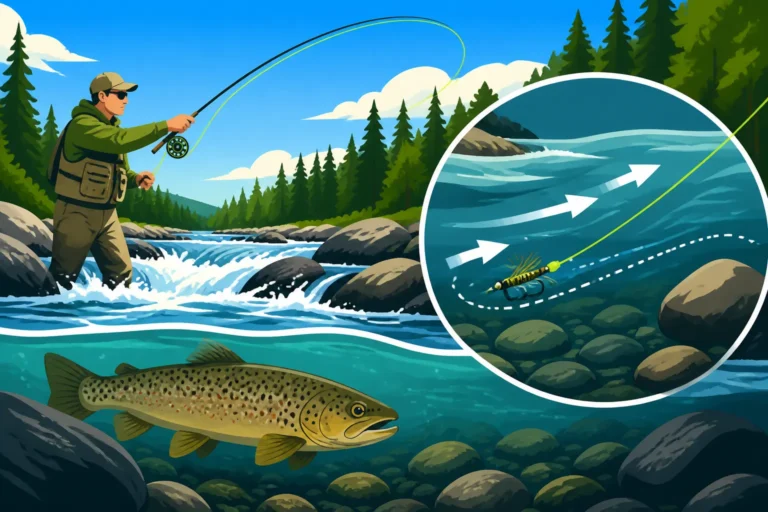
Across and Downstream Swing: This is a classic and highly effective method. Cast your Woolly Bugger across the current, or slightly downstream, allowing it to swing in an arc below you. As the fly swings, it will naturally move with the current, creating an enticing motion. You can impart additional action by gently stripping in line, giving the fly short darting movements, or by simply letting the current do the work. This technique is fantastic for imitating sculpins or leeches moving across the riverbed. Focus your casts on current seams, eddy lines, and the tails of pools where trout often lie in ambush. Adjust your cast angle and mend your line upstream to control the swing speed; a slower swing often works wonders.
Upstream and Dead Drift: While typically reserved for nymphing, dead-drifting a Woolly Bugger can be incredibly effective, especially if you suspect trout are keying in on larger, drowned insects or even small baitfish that have been dislodged by the current. Cast upstream and slightly across, using ample line mends to achieve a natural, drag-free drift. You might need to use a strike indicator, like you would for typical nymphing, to detect subtle takes. The key here is to keep as much slack out of your line as possible without impeding the drift, allowing you to feel the often-gentle takes. This is particularly effective in slower, deeper runs or when fishing pocket water.
Stripping Retrieve: This method imitates a fleeing baitfish or a scuttling crayfish. Cast your Woolly Bugger into likely holding water – behind rocks, under submerged logs, or along undercut banks. Once it sinks to the desired depth, begin stripping in line in short, quick bursts, pauses, or long, steady pulls. Vary your retrieve speed and cadence until you find what the trout are responding to. Sometimes a slow, methodical strip is best; other times, an erratic, faster retrieve can provoke aggressive strikes. Pay close attention to your line, as strikes often occur during pauses or on the strip.
Lake and Pond Strategies
Lakes and ponds present a different set of challenges and opportunities for the Woolly Bugger, where current isn't a factor.
Casting and Retrieving: This is the most common method for stillwater. Cast your Woolly Bugger out and let it sink to the desired depth. Then, begin a slow, steady retrieve, or experiment with short strips and pauses. The goal is to make the fly look like a natural food item swimming through the water. Imagine a leech undulating or a small minnow darting. Sometimes, a long, slow pull with a pause at the end will be all it takes. Other times, an aggressive, erratic strip will trigger a chase.
Slow Trolling/Drifting: If you're fishing from a boat, canoe, or kayak on a larger lake, slow trolling or drifting can cover a lot of water and help you locate actively feeding trout. Cast your Woolly Bugger behind the boat, allow it to sink, and then either paddle/motor slowly or let the wind drift you along. This allows the fly to present naturally through different depths and areas. Vary the length of your line, the depth you're fishing, and even the type of retrieve you add while drifting. This is an excellent technique for How to Catch Lake Trout in Ontario in stillwater environments, especially if you suspect they're cruising drop-offs or underwater structures.
Stillwater Stripping: Sometimes, in lakes, trout will be actively cruising shallower areas, feeding on baitfish or leeches near weed lines or rocky shoals. In these situations, casting parallel to the structure and stripping the Woolly Bugger back can be highly effective. The key is to cover water methodically and vary your retrieve until you find what the fish want. Pay attention to changes in depth, weed beds, or submerged timber, as these are prime ambush points. Using a sinking line or a sink-tip line will greatly assist in getting your fly into the proper feeding lanes.
Reading the Water for Trout
No matter the water type, understanding where trout hold is critical to success with a Woolly Bugger. Trout are opportunistic predators, always looking for an easy meal with minimal effort, and often positioning themselves in places that offer both food and protection.
In rivers and streams, focus on areas that break the current, creating slower water where trout can rest and ambush prey. This includes current seams (where fast and slow water meet), eddies (circular currents behind obstructions), pools (deep, slow sections), and riffles (shallow, fast-moving water, especially at the tailout where fish may pick off dislodged food). Look for undercut banks, submerged rocks, log jams, and overhanging vegetation, all of which offer cover and ambush points. Trout will also hold in tailouts of pools, where food is swept to them, and in the deeper sections of runs.
In lakes and ponds, structure is your friend. Trout will often relate to drop-offs, transitioning from shallow to deep water. Submerged humps, rock piles, weed lines, and points extending into the lake are all prime locations. Early and late in the day, trout might cruise shallower bays or shorelines, while during brighter, warmer periods, they'll often retreat to deeper, cooler water. If you're using a Best Fish Finder for Deep Lake Fishing, pay close attention to depth changes, baitfish schools, and any visible structure on the bottom. Remember that Ontario Lake Trout Limit and Possession Rules often vary depending on the specific zone, so always check the regulations for the body of water you're fishing.
Tips for Success in Ontario Waters
Fishing the Woolly Bugger in Ontario means adapting to our unique seasons, diverse fisheries, and varying conditions. A few key considerations will significantly boost your chances of success.
Matching the Hatch or Lack Thereof
One of the beautiful things about the Woolly Bugger is that it doesn't always require a "hatch" to be effective. While matching specific insect hatches is often paramount in fly fishing, the Woolly Bugger is more about a generalist approach.
There will be times, especially during prolific insect emergences, when trout are highly selective, keying in on tiny mayflies, caddis, or stoneflies. In these instances, a Woolly Bugger might be ignored. However, in many other situations, particularly when there's no obvious hatch occurring, or when trout are looking for a more substantial meal, the Woolly Bugger shines. It's often the "steak dinner" when the fish are tired of "salad."
When in doubt, start with an olive or black Woolly Bugger in a size 8 or 10. If that's not working, don't be afraid to experiment with different colours and sizes. Sometimes, a smaller, unweighted Woolly Bugger can imitate a large nymph, while a larger, weighted one looks like a minnow. Remember, the goal is often to provoke a reaction strike or to offer a meal so substantial that a trout can't pass it up. This is particularly true for larger, more predatory trout that are less interested in tiny insects. For specific patterns, you might want to refer to Fly Patterns for Ontario Trout Streams for other options, but the Bugger is often the anchor.
Adjusting to Conditions
Ontario's weather and water conditions can change rapidly, and successful Woolly Bugger fishing means being flexible.
Water Clarity: In clear water, natural colours like olive, black, or brown tend to be most effective. Use smaller sizes and a finer tippet (Best tippet size for stocked trout) to avoid spooking fish. In murky or stained water, brighter colours like white, chartreuse, or even a brightly colored bead head can increase visibility and trigger strikes. The increased visibility helps the fish locate the fly.
Water Temperature: Trout activity is heavily influenced by water temperature. In colder water (spring and fall), trout are often sluggish and prefer a slower presentation. A slow, methodical retrieve with pauses or a dead-drift can be incredibly effective. As water temperatures warm up in summer, trout become more active and aggressive, and you can often employ faster, more erratic retrieves. However, during the hottest parts of summer, trout will seek out cooler, deeper water, so you'll need to get your fly down to them. Understanding the Best Time of Year to Fish in Ontario and the various Ontario Fishing Seasons by Zone and Month is crucial for planning your approach.
Time of Day: Early morning and late evening are often prime times for trout feeding, regardless of the season. During these low-light periods, trout feel more secure moving into shallower water to feed, and a Woolly Bugger can be incredibly effective. Mid-day, especially in summer, might require fishing deeper or in shaded areas. Overcast days can extend the productive fishing window throughout the day.
Catch and Release Best Practices
As responsible anglers, we have a duty to protect Ontario's precious trout populations. When fishing with Woolly Buggers, which often involve aggressive strikes and deeply hooked fish, practicing proper catch and release is paramount.
First, minimize the fight time. While it's exhilarating to battle a strong trout, prolonged stress can be detrimental, especially in warmer water. Use appropriate tackle, like a Best Spinning Rods for Walleye equivalent if you're using conventional gear, or a suitably powerful fly rod (Best Fly Rods for Ontario Trout Streams), to bring the fish in efficiently.
Always use a net, preferably one with a rubberized, knotless mesh (Best Landing Net for Trout), to land the fish. This protects their delicate scales, fins, and slime coat. Avoid beaching fish on rocky banks or abrasive surfaces. Once the fish is in the net, keep it in the water as much as possible.
Handle the fish gently with wet hands, supporting its belly. If the hook is visible and easily accessible, use your forceps to quickly remove it. If the fish is deeply hooked and the removal would cause excessive damage, consider cutting the line as close to the hook as possible. In many cases, the hook will eventually rust out.
Before releasing the fish, hold it gently in the current, facing upstream, until it regains its strength and can swim away on its own. Never vigorously push it back and forth; this can actually harm its gills. Watching a healthy trout swim away vigorously after a careful release is one of the most rewarding parts of fly fishing. Many anglers purchase specialized release tools and kits, available from various outdoor retailers and even on platforms like Amazon, to ensure they're always prepared for ethical catch and release.
| Woolly Bugger Color | Primary Imitation | Best Conditions | Retrieve Suggestion |
|---|---|---|---|
| Olive | Sculpins, large nymphs | Most versatile, clear to lightly stained water | Erratic strips, slow swing, dead drift |
| Black | Leeches, dark baitfish | Stained/murky water, low light, deep pools | Slow, undulating strips, dead drift |
| Brown | Crayfish, certain baitfish | Rocky bottoms, varied clarity | Jigging motion, short hops, slow crawl |
| White/Chartreuse | Fleeing baitfish | Murky water, low light, aggressive fish | Fast, erratic strips, reaction strikes |
| Bugger with Bead Head | Deeper water, faster sink rate | Deep pools, faster currents, stillwater | Jigging, slow trolling, bottom bouncing |
Fishing a Woolly Bugger is more than just casting a fly; it's about understanding trout behaviour, adapting to the water, and presenting a versatile offering that consistently works. Whether you're a seasoned fly angler looking for a reliable producer or new to the sport, mastering the Woolly Bugger will undoubtedly add countless memorable moments to your Ontario Fishing License Guide for 2026 adventures. So tie one on, get out there, and experience the power of this classic pattern for yourself!
Disclaimer
This article is for general informational purposes only and does not constitute professional advice. Laws, prices and regulations vary by location and change over time. Consult a qualified professional for guidance on your specific situation.