How to pattern walleye on an unfamiliar Ontario lake
There’s nothing quite like the thrill of exploring a brand-new lake in Ontario, casting your line into unknown waters, and hoping for that tell-tale tap of a walleye. But let's be honest, that initial excitement can quickly turn into frustration when you're faced with a vast expanse of water and no idea where to even begin looking for those elusive fish. It feels like finding a needle in a haystack, right? This guide is here to cut through that overwhelm, giving you a systematic approach to unlock the walleye patterns on any unfamiliar Ontario lake you visit, turning those head-scratching moments into triumphant catches.
The Pre-Trip Reconnaissance – Your Secret Weapon
Before you even load up the boat or pack your tackle box, a significant amount of your success will be determined by what you do at home. Thinking you can just show up and randomly cast is a recipe for a slow day, especially when walleye are involved. They're predictable creatures if you know what to look for, and the best way to start is with some good old-fashioned research.
Digital Scouting – Maps and Apps
The digital age has truly revolutionized how we approach fishing unfamiliar waters. Gone are the days of relying solely on guesswork or vague advice from a local bait shop. Now, we have incredible tools at our fingertips that allow us to virtually explore a lake from the comfort of our homes. Your first mission is to dive deep into bathymetric charts and satellite imagery. Apps like Navionics, C-MAP, or even Google Maps can be absolute game-changers. Look for contour lines that indicate depth changes – walleye are almost always associated with structure. Identify main lake points that extend far out, deep humps, subtle rises from the main basin, and channels that connect different parts of the lake. These are classic walleye holding areas.
Beyond just identifying depths, pay close attention to areas where different types of structure meet. Walleye love transition zones: where hard bottom meets soft bottom, where rock piles meet mud flats, or where deep water suddenly becomes shallow. Look for sharp drop-offs, underwater reefs, and bottle-neck areas where current might be concentrated. Satellite imagery can also reveal visible cover like docks, submerged timber (if the water is clear enough), and prominent weed lines in shallower areas, all of which can hold walleye at different times of the year. Don't forget to consult the Ontario Fish ON-Line Interactive Zone Map, Explained as a starting point, which offers invaluable insights into the specific regulations and general characteristics of the lake you're targeting. This initial homework will arm you with a mental map of potential hotspots, saving you countless hours of aimless searching once you're on the water.
Understanding Walleye Habits and Ontario Seasons
Knowing where to look is one thing, but understanding why walleye are there, and when, is the next crucial piece of the puzzle. Walleye movements are heavily influenced by the season and their life cycle. For instance, in early spring, after the ice recedes, walleye are often found in shallower, warming areas, especially near river mouths or spawning grounds. As the season progresses into summer, they'll typically retreat to deeper, cooler waters, often congregating around structures like reefs, humps, and steep breaks. Fall sees them moving shallower again, feeding aggressively before winter, and during ice fishing season, they might be found relating to specific depth transitions or oxygenated areas.
It's vital to check the Ontario Fishing Seasons by Zone and Month for the specific fisheries management zone you'll be fishing in. This will dictate not only when you can fish but also when certain species, like walleye, have their open season. You'll also want to know the Ontario Walleye Opener Dates by Zone for your specific area, as this can often define the initial patterns. Understanding their spawning cycle, too, is key; Walleye Spawning Season in Ontario typically occurs shortly after ice-out, and knowing this helps you anticipate their post-spawn recovery and movements. Walleye are predators that primarily feed on baitfish, and they often prefer lower light conditions, meaning dawn, dusk, or cloudy days can be prime times. They'll generally hold close to structure, waiting to ambush prey. By internalizing these general habits and seasonal movements, you can overlay them onto your digital maps and prioritize your search areas more effectively, significantly narrowing down the vastness of an unfamiliar lake.
On-Water Exploration – Putting the Pieces Together
Once you've done your homework and arrived at the lake, it's time to put your theories to the test. This phase is all about systematic searching and paying close attention to what your electronics and your rod are telling you. Don't just motor out and start casting randomly; approach it with a strategy based on your pre-trip scouting.
Starting Your Search – The Key Areas
Based on your digital reconnaissance, you should have a list of several promising locations. The trick now is to fish them efficiently. I like to start with major main lake points, especially those that have a sharp drop-off into deeper water. These act like underwater highways for baitfish, and walleye will often stage on them. Underwater humps and reefs, particularly those with access to deeper water, are also high-percentage spots. If there's a river mouth or a significant inflowing creek, these areas can be productive, especially in spring and fall, as they offer current breaks and warmer or cooler water, depending on the season. Deep weed edges – not just any weeds, but the defined edges where healthy green weeds meet open water – are also prime ambush points for walleye.
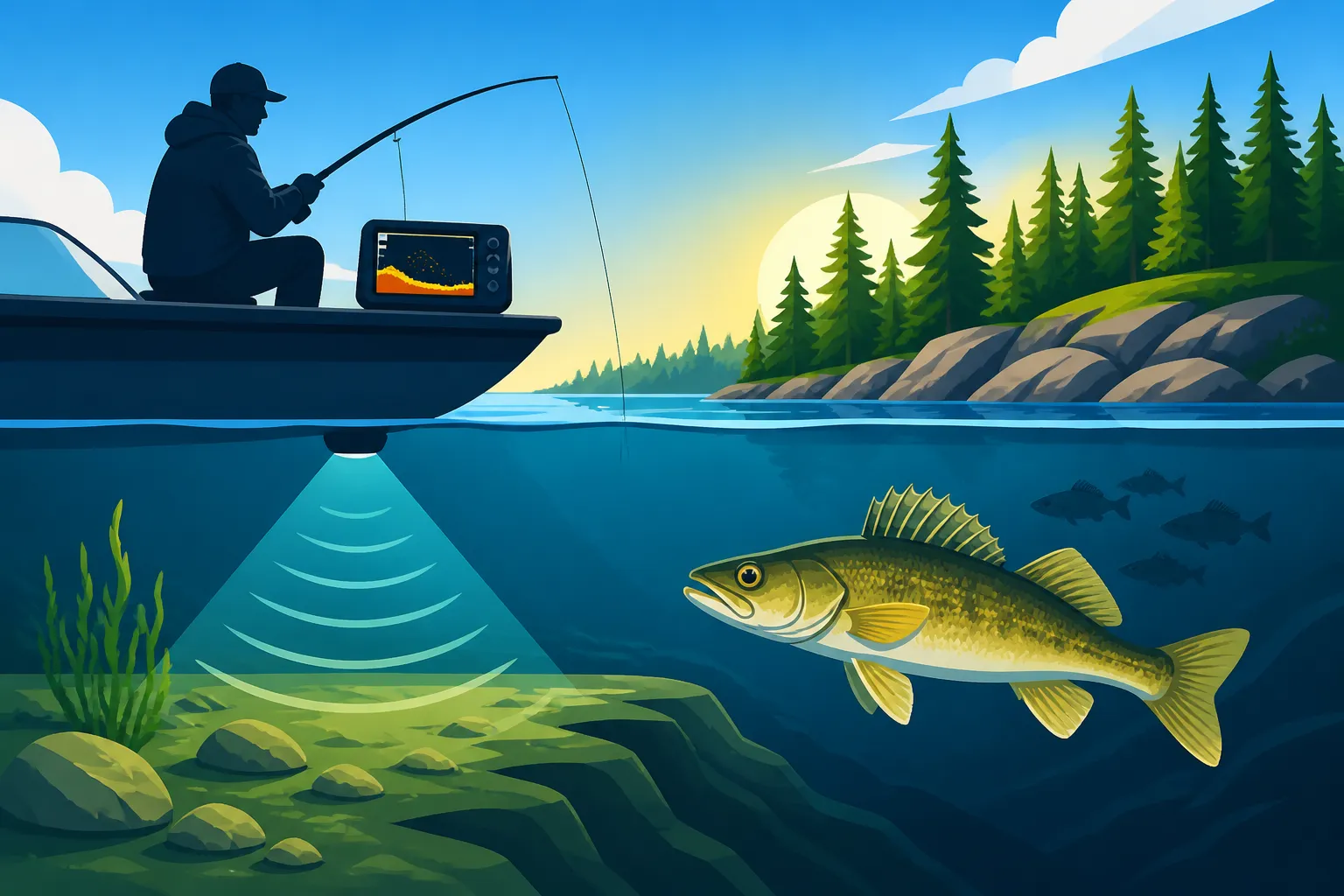
When fishing these areas, don't just sit in one spot. Use techniques like fan casting, where you cast in a wide arc to cover different depths and angles from your boat. If you're trolling, establish a grid pattern over a potential hotspot, making passes at different depths and speeds until you contact fish. This systematic approach allows you to quickly eliminate unproductive water and pinpoint where the walleye are holding. And this is where your electronics become invaluable. A good sonar or fish finder is arguably the most critical piece of equipment for patterning walleye. Best Fish Finders for Ontario Lakes can help you identify not just the bottom structure you scouted digitally, but also baitfish schools and even individual walleye suspended off the bottom. Your screen will light up when you're passing over a fish-holding area, confirming your theories or pointing you in a new direction.
The Importance of Baitfish and Water Conditions
Walleye are opportunistic predators, and their movements are intrinsically tied to their food source: baitfish. If you're marking schools of baitfish on your sonar, you can bet that walleye are likely not far behind, or at least in the vicinity. Look for baitfish congregating near structure, in open water, or suspended at certain depths. Walleye will follow these schools, sometimes for miles, which is why understanding baitfish movements is crucial to patterning them. If you're not seeing bait, you're likely not in a productive area for walleye, unless they're strictly relating to bottom structure and heavily pressured.
Beyond bait, water conditions play a massive role. Water temperature is arguably the most significant factor influencing walleye activity. They have preferred temperature ranges for feeding and spawning, and understanding Best water temperature for walleye fishing can help you narrow down where they'll be. For instance, in summer, as surface temperatures rise, walleye often move deeper to find cooler, more oxygenated water. Water clarity also matters; walleye prefer somewhat stained or turbid water, which gives them a predatory advantage due to their excellent low-light vision. Fishing clear lakes might require deeper presentations or focusing on low-light periods. Furthermore, pay attention to weather changes. A sudden cold front can often shut down the bite, pushing walleye deeper and making them lethargic. Knowing How to catch walleye during a cold front in Ontario involves slowing down your presentation and often fishing deeper. Conversely, stable weather or approaching low-pressure systems can often trigger feeding frenzies. Observing these environmental factors and adjusting your approach accordingly is key to cracking the code on any new lake.
Refining Your Pattern – Lures, Depth, and Presentation
Once you've found a promising area and identified some potential fish or bait, the next step is to figure out what they want to eat and how they want it presented. This stage is all about experimentation and fine-tuning.
The Right Lures for the Job
Walleye aren't generally picky eaters, but they can be particular about how their food is presented. Having a versatile tackle box is essential when you're trying to pattern them on an unfamiliar lake. Your go-to arsenal should include a variety of jigs, crankbaits, and spinner rigs. Jigs, tipped with a live minnow, a piece of a worm, or soft plastic baits like a Berkley Gulp! minnow or grub, are incredibly effective for vertical jigging over structure or pitching into shallower spots. Vary your jig weight depending on depth and current; sometimes a lighter jig allows for a slower, more natural fall that walleye can't resist.
Crankbaits are fantastic for covering water, especially when trolling. You'll want a selection of diving depths – from shallow runners for weed edges to deep divers that can reach 20, 30, or even 40 feet. Different colours, from natural perch or shiner patterns to brighter firetiger or chartreuse, can be critical depending on water clarity and light conditions. Many anglers swear by Rapala, Bandit, or Flicker Shad crankbaits, and you can find a huge variety of options available on Amazon to stock your tackle box. Spinner rigs, often called crawler harnesses, are deadly when pulled slowly behind a bottom bouncer, especially over flats or along deeper contours. They offer a natural presentation with a live nightcrawler that walleye find hard to resist. Make sure you have a good selection of Best Tackle for Ontario Walleye and Best Crankbaits for Ontario Walleye to maximize your chances.
Depth, Speed, and "The Narrows"
This is where the true "patterning" comes in. Finding fish is one thing; consistently catching them is another. Walleye can be incredibly precise about the depth they prefer on any given day. You might find them suspended 10 feet off the bottom in 30 feet of water, or hugging the bottom in only 12 feet. If you're trolling, vary your depth by letting out more or less line, or by using different dive curve crankbaits. If you're jigging, pay close attention to the depth at which you get bites. Sometimes, moving just a few feet deeper or shallower can be the difference between a hot bite and dead silence.
Speed is equally important. Walleye might want a slow, methodical retrieve on one day and an aggressive, fast retrieve on another. Experiment with your trolling speed, your jigging cadence, or how quickly you're reeling in a crankbait. This experimentation is often referred to as finding "the narrows" – that specific combination of depth, presentation, and retrieve speed that triggers bites that day. It's a precise science, but when you hit it, it's unmistakable. If you're hitting a specific type of structure, like a rock pile, try different sides of it. Are they on the shallow side, the deep side, or on top? Don't be afraid to change colours of your lures. Sometimes, a subtle shift from a natural baitfish pattern to a brighter, more aggressive colour can make all the difference, and a quick search on Amazon can show you the vast array of options available to match any condition. Mastering How to fish deep structure for summer walleye is a prime example of this type of precise patterning.
Recording Your Success and Adapting
The beauty of fishing is that no two days are ever exactly alike. What worked yesterday might not work today, and what works on one lake might not translate perfectly to another. However, by being diligent and flexible, you can build a wealth of knowledge that will make every new lake less intimidating.
Keeping a Fishing Log
This might sound like homework, but trust me, it's one of the most valuable habits you can develop. After a day on the water, take a few minutes to jot down what you observed. What was the weather like? What was the water temperature? What depth did you find the fish? What kind of structure were they relating to (e.g., "rock hump," "deep weed line," "channel edge")? What lures and colours were most effective? What time of day were the bites most frequent? Note down specific locations using GPS coordinates if possible. This isn't just for an unfamiliar lake; this log becomes your personal database.
Over time, you'll start to see patterns emerge across different lakes, or even on the same lake under similar conditions. For instance, you might discover that on cloudy, cooler days in the fall, walleye always seem to be on main lake points in 15-20 feet of water, hitting a chartreuse crankbait. This personal fishing history will accelerate your learning curve exponentially, allowing you to hit the water with a stronger starting game plan every time. It allows you to build a reliable understanding of factors like Best Time of Day to Catch Walleye or Best months to catch walleye in Ontario for your favourite regions.
Don't Be Afraid to Change
The biggest mistake an angler can make when trying to pattern walleye is sticking to a "hot spot" that has gone cold. Walleye are constantly on the move, influenced by baitfish, weather, pressure, and even boat traffic. If the bite slows down or stops altogether, don't be afraid to change things up. This might mean moving to a new area of the lake, trying a different depth, switching lure types or colours, or even altering your retrieve speed. Sometimes, simply taking a break and returning to a spot later in the day can reignite the bite.
Having a diverse tackle box, easily stocked from places like Amazon, means you're prepared for any scenario. It's about being adaptable and listening to what the fish are telling you (or not telling you!). The process of patterning walleye on an unfamiliar Ontario lake is a continuous learning curve, but by combining diligent pre-trip planning, systematic on-water exploration, precise lure and depth refinement, and meticulous record-keeping, you'll soon be unlocking the secrets of those waters and enjoying consistent success. Happy walleye hunting!
Disclaimer
This article is for general informational purposes only and does not constitute professional advice. Laws, prices and regulations vary by location and change over time. Consult a qualified professional for guidance on your specific situation.