Best Kayaks for Ontario Fishing
There’s nothing quite like the freedom of fishing from a kayak in Ontario. For years, many anglers felt tethered to expensive powerboats or limited to shore fishing, often missing out on pristine, inaccessible honey holes. This guide is all about cutting those invisible leashes, helping you understand the world of fishing kayaks, and pointing you toward the best options to unlock an entirely new angling experience across Ontario’s incredible waters.
Why Kayak Fishing in Ontario is a Game Changer
Kayak fishing has exploded in popularity across Ontario, and for very good reason. Many anglers, myself included, used to think of kayaks as glorified pool toys, only suitable for a leisurely paddle on calm days. But modern fishing kayaks are sophisticated, stable platforms designed with the serious angler in mind, offering a unique blend of accessibility, stealth, and cost-effectiveness that traditional boats simply can't match. They’ve completely transformed how and where many of us chase our favourite species, from chunky smallmouth bass in Georgian Bay to elusive lake trout in northern wilderness lakes.
Unlocking Remote Waters
One of the most compelling advantages of kayak fishing in Ontario is the ability to reach waters that are otherwise inaccessible. Think about it: how many times have you driven past a small, glittering lake or a winding river, tucked away off the main road, and wondered what secrets it held? Most of these gems don't have boat launches designed for trailers, making them no-go zones for larger vessels. Kayaks, however, are lightweight and nimble. You can often launch them from a simple shoreline, a patch of grass, or even portage them short distances to reach truly untouched fishing grounds. This opens up a whole new world of opportunities, allowing you to explore smaller tributaries, hidden bays, and back-lakes that rarely see angling pressure. The feeling of being the only one on a pristine body of water, knowing you've earned your way in, is incredibly rewarding.
This accessibility isn't just about remote wilderness lakes either; it applies to local waters too. Many urban parks or conservation areas might have prime fishing spots just a short walk from a parking lot, but no suitable access for powerboats. A kayak makes these spots fair game, allowing you to slip onto the water quickly and efficiently for a short session after work or on a weekend morning. It’s about expanding your horizons without needing a massive investment in a truck and trailer, or dealing with crowded public launches.
The Stealth Advantage
Fish are inherently wary creatures, especially in heavily pressured waters. The loud thrum of an outboard motor, the splashing of oars, or even the shadow cast by a large boat can send them scattering. This is where the kayak truly shines, offering an unparalleled level of stealth. Paddling or pedaling a kayak through the water produces minimal noise and disturbance, allowing you to approach prime fishing areas, like shallow weed beds, rocky points, or submerged timber, without alerting your target species. You can glide silently into position, get right on top of the fish, and present your bait or lure naturally.
This stealth factor is particularly beneficial when sight fishing for species like cruising smallmouth bass on clear-water lakes or stalking wary trout in a river. The low profile of a kayak also helps you blend into the natural environment, making you less conspicuous to both fish and other wildlife. It's an immersive experience that brings you closer to nature, allowing you to observe the subtle signs of fish activity without disrupting the delicate balance of the ecosystem. Imagine slowly drifting over a submerged structure on Lake Simcoe, spotting a school of jumbo perch on your fish finder, and being able to drop a jig without a sound. It's a game-changer.
Cost-Effectiveness and Portability
Let's be honest, fishing can be an expensive hobby. Between boats, motors, trailers, fuel, and maintenance, the costs can quickly add up. Kayak fishing offers a much more budget-friendly entry point into boat ownership. The initial investment in a quality fishing kayak is significantly less than a traditional powerboat, and the ongoing costs are minimal. There's no fuel to buy (unless you add an electric motor, but even then, it's far less than gas), no expensive engine maintenance, and often, much cheaper storage solutions. You can transport many kayaks on the roof of your car or in the back of a pickup truck, eliminating the need for a dedicated trailer and the associated licensing and insurance costs.
The portability aspect also extends to your actual fishing trips. You can spontaneously decide to hit a new spot without the hassle of preparing a large boat, checking tires, and dealing with launch ramps. This flexibility encourages more time on the water, more exploration, and ultimately, more fishing opportunities. For many, a kayak represents the perfect balance between capability and convenience, allowing them to enjoy the sport they love without breaking the bank or dedicating their entire garage to boat storage. Ontario Boating Laws for Anglers are still important to understand, but the barrier to entry is significantly lower.
Key Considerations When Choosing an Ontario Fishing Kayak
Choosing the right fishing kayak for Ontario's diverse waters isn't a one-size-fits-all decision. The perfect kayak for chasing walleye on the Bay of Quinte might be quite different from one best suited for fly fishing a small brook trout stream. Before you start browsing the aisles at Bass Pro Shops or scrolling through Amazon, it’s crucial to think about what kind of fishing you primarily do, where you’ll be doing it, and what your personal priorities are. Understanding these key factors will help you narrow down the vast array of options and make an informed choice that will serve you well for years to come.
Stability vs. Speed
This is often the biggest trade-off in kayak design and a critical decision point for any angler.
Stability: A stable kayak allows you to move around, stand up to cast (a huge advantage for sight fishing or better casting angles), and feel secure when battling a big fish or dealing with choppy water. Wider kayaks, often with flatter hulls, inherently offer more primary stability (how stable it feels when you first get in) and secondary stability (how resistant it is to tipping once it starts to lean). For many anglers, especially beginners or those fishing larger, open waters like Lake Erie or Lake Huron, high stability is paramount. You want to feel confident and comfortable, not constantly on edge. A stable platform means less worry about gear going overboard and more focus on fishing. It also makes getting in and out of the kayak much easier, which is a huge bonus if you have any mobility concerns or plan to fish in varied conditions.
Speed: A faster kayak typically has a narrower, longer, and more V-shaped hull. This design cuts through the water more efficiently, requiring less effort to cover long distances or paddle against currents. If you plan to explore vast lakes, cover a lot of water quickly, or navigate rivers with strong flows, speed might be a higher priority. However, increased speed almost always comes at the cost of stability. A faster kayak will feel tippier and might not allow for standing to cast. For anglers who prefer a seated position and focus on covering ground, speed can be a major advantage. Consider your typical fishing grounds: are you paddling miles across open water, or are you primarily exploring small, confined bays? Your answer will heavily influence this crucial balance.
Propulsion: Paddle, Pedal, or Motor?
How you move your kayak impacts your fishing experience dramatically.
Paddle Kayaks: These are the traditional option, relying on your arm strength with a double-bladed paddle. They are generally the most affordable and lightweight type of fishing kayak. Paddling offers a good workout and connects you intimately with the water. The main drawback is that you can't actively fish while moving, as one hand is always on the paddle. However, for those who value simplicity, a lower price point, and the fitness aspect, paddle kayaks are an excellent choice. They are fantastic for slipping into tight spots, maneuvering through dense cover, and navigating rocky shallows.
Pedal-Drive Kayaks: These have revolutionized kayak fishing for many. A pedal system, often a propeller-driven or fin-driven unit, allows you to propel the kayak using your legs, much like riding a bicycle. The immense advantage here is hands-free operation. You can continuously move and position your kayak while simultaneously casting, reeling, and fighting a fish. This greatly increases your efficiency and ability to cover water, troll lures, or maintain position in wind or current. Systems from brands like Hobie (known for their MirageDrive) or Native Watercraft (with their Propel Drive) are incredibly popular. The trade-off is higher cost and increased weight, making them a bit harder to transport. For many, however, the ability to fish hands-free is worth every penny, particularly when chasing active species like walleye or muskie.
Motorized Kayaks (Electric Trolling Motors): Some kayaks are designed to accept small electric trolling motors, or you can add aftermarket kits to many pedal or paddle kayaks. This offers the ultimate in effortless propulsion, allowing you to cover vast distances, fight strong currents, or move against the wind with ease. Motors also provide precise speed control for trolling and effortless maneuvering. You'll need to consider battery weight and life, charging, and the additional cost of the motor and battery. Motorized kayaks are fantastic for large lakes like Lake Ontario where covering significant ground is often necessary, or for battling strong winds that can make paddling or pedaling exhausting. Just remember to check Ontario Boating Laws for Anglers for any specific requirements related to motor size or registration.
Storage and Rigging Options
Fishing kayaks aren't just bare boats; they are often highly specialized platforms for carrying and organizing your gear.
Storage: Consider how much gear you typically bring. You'll need space for tackle boxes, a cooler for drinks and fish, safety equipment, and perhaps a dry bag for electronics and personal items. Look for kayaks with ample hatch access, large open tank wells (often in the stern) secured with bungee cords, and plenty of track systems for mounting accessories. Dedicated rod storage, either horizontal rod holders along the sides or vertical rod holders in the stern, is also a huge plus. Some kayaks even feature built-in tackle storage trays or dry compartments. Think about accessibility too: can you easily reach your most-used items while seated?
Rigging Options: Modern fishing kayaks come with "gear tracks" or "accessory rails" that allow you to mount various add-ons without drilling holes. These are incredibly versatile for attaching rod holders, fish finder mounts, camera mounts, and other specialized accessories. Consider the number and placement of these tracks. Are they in convenient spots? Can you easily customize your setup? Some kayaks also feature integrated transducer mounts for fish finders, making installation much cleaner. The ability to customize and rig your kayak to your specific needs is a major advantage, allowing you to create a personalized fishing machine. Best Tackle Box Setup for Ontario Anglers might inspire you on how to organize what goes inside your kayak.
Material and Durability
The material a kayak is made from directly impacts its weight, durability, and cost.
Rotomolded Polyethylene: This is by far the most common material for fishing kayaks. It's incredibly durable, impact-resistant, and relatively affordable. These kayaks can take a serious beating from rocks, docks, and transport without cracking. The main downside is weight; polyethylene kayaks can be quite heavy, making them challenging for one person to load onto a roof rack. However, their ruggedness makes them ideal for the rough and tumble of Ontario's varied shorelines.
Thermoformed ABS: These kayaks are generally lighter and often have a smoother finish than rotomolded boats. They offer a good balance of durability and reduced weight, making them easier to transport. The cost is typically higher than polyethylene. If you frequently load and unload your kayak solo, a thermoformed boat might be worth the extra investment for its lighter weight.
Composite Materials (Fiberglass, Carbon Fiber): These are found in high-performance, usually faster, kayaks. They are very lightweight and stiff, which translates to excellent paddling efficiency. However, they are also the most expensive and least durable, susceptible to damage from impacts with rocks or rough handling. You'll rarely see a dedicated fishing kayak made entirely of composite materials, as the ruggedness needed for fishing often outweighs the benefits of extreme light weight.
Inflatable PVC/Hypalon: Inflatable fishing kayaks (often drop-stitch PVC for rigidity) are incredibly portable when deflated and packed away. They are surprisingly durable, especially higher-end models, and can navigate very shallow water. The downside is setup time (inflation) and potential vulnerability to punctures from sharp hooks or submerged hazards, though modern inflatables are quite robust. For those with limited storage space or who need maximum portability, a high-quality inflatable can be a fantastic option. They offer a different kind of portability, allowing you to throw one in the trunk of a car without a roof rack.
Types of Fishing Kayaks Best Suited for Ontario Waters
Ontario's vast network of lakes, rivers, and even the Great Lakes demands different tools for different jobs. Just like you wouldn't use a muskie rod for panfish, you wouldn't choose every kayak for every fishing scenario. Understanding the fundamental types of fishing kayaks available is the first step in matching the right vessel to your specific angling ambitions. Each design brings its own set of advantages and compromises, making some better suited for particular environments or fishing styles than others.
Sit-on-Top (SOT) Kayaks
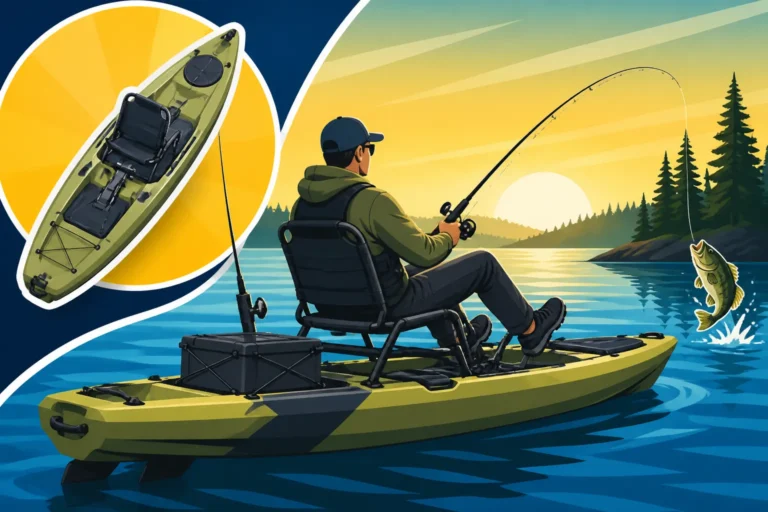
Sit-on-top kayaks are arguably the most popular choice for fishing in Ontario, and for good reason. As the name suggests, you sit on top of the kayak, rather than inside a cockpit. This design offers a significant advantage in terms of stability and freedom of movement. Most SOT fishing kayaks are designed with wide, stable hulls, making them ideal for standing up to cast, which can dramatically improve your visibility, casting accuracy, and hook-setting power. The open deck also means that if you take on water from waves or splashing, it drains out through self-bailing scupper holes, keeping your fishing platform relatively dry.
Another huge benefit of SOT kayaks is their accessibility. It's much easier to get on and off a sit-on-top, which is great if you plan to wade shallow areas or take breaks on shore. They also offer abundant deck space for gear, often featuring large tank wells with bungee cords for coolers, tackle crates, and dry bags, as well as integrated gear tracks for mounting accessories. Brands like Wilderness Systems, Old Town, and Hobie offer many excellent SOT fishing models, often found at retailers like Bass Pro Shops. While generally slower than sit-inside kayaks due to their wider beam, the enhanced stability and open layout make them incredibly versatile for everything from calm inland lakes to moderately choppy sections of larger rivers. If you're looking for a comfortable, stable platform to stand and cast for smallmouth bass or troll for walleye, a good SOT is tough to beat.
Sit-Inside (SI) Kayaks
While less common for dedicated fishing than their sit-on-top counterparts, sit-inside kayaks still have a place in the Ontario angling scene, particularly for those who prioritize efficiency and protection from the elements. In a sit-inside kayak, you sit with your legs and lower body inside a cockpit, protected by the hull. This design generally offers better protection from wind, spray, and cold water, which can be a real plus during early spring or late fall fishing trips on cooler days. The enclosed cockpit also tends to keep you warmer, making those shoulder-season outings more comfortable.
SI kayaks, especially touring or recreational models, are often narrower and have more streamlined hulls than SOTs, making them faster and easier to paddle long distances. If you're exploring vast stretches of river like the French River or covering significant water on larger lakes where speed and efficiency are key, a sit-inside could be a good option. They are generally lighter than many feature-heavy SOTs, which can make transport easier if you're portaging or have a lighter vehicle. However, they lack the standing capability and open deck space of SOTs, and if you capsize, getting back in can be more challenging. While not typically designed with extensive fishing-specific features, many can be rigged with basic rod holders for a minimalist approach, especially for those interested in fly fishing quiet waters or How to Fish a River for Smallmouth Bass where subtle movements are key.
Pedal-Drive Kayaks
As mentioned earlier, pedal-drive kayaks are a true game-changer for many kayak anglers in Ontario, offering a distinct advantage by freeing up your hands for fishing. These kayaks integrate a pedal system, which typically powers either a propeller (like Native Watercraft's Propel Drive) or a set of fins (Hobie's MirageDrive). The ability to use your legs to propel the boat means you can troll lures, hold position against wind or current, or maneuver precisely while simultaneously casting, retrieving, or fighting a fish. This hands-free operation dramatically increases your efficiency on the water and can lead to more fish in the net.
Pedal-drive kayaks are exceptionally well-suited for trolling for walleye on large bodies of water like Lake Erie or the Bay of Quinte, where maintaining a consistent speed is crucial. They are also fantastic for working shorelines for bass or pike, allowing you to slowly pick apart cover without ever having to put your rod down. Most pedal-drive kayaks are sit-on-top designs, offering excellent stability and ample rigging space, similar to high-end paddle SOTs. The primary drawbacks are their higher price point, increased weight (due to the pedal drive unit and robust hull designs), and the fact that the pedal drive mechanism often requires a bit more maintenance and can be a snag point in very shallow or weedy water. Despite these, for serious anglers who spend a lot of time on the water, the efficiency and convenience of a pedal-drive system often justify the investment. You can often find a good selection of these premium models at specialty fishing retailers or through online platforms like Amazon.
Inflatable Fishing Kayaks
The world of inflatable kayaks has come a long way from the flimsy pool toys of yesteryear. Modern inflatable fishing kayaks, particularly those using drop-stitch technology (which creates a rigid, flat floor when inflated), are incredibly robust, stable, and surprisingly capable fishing platforms. Their standout feature is, of course, portability. When deflated, they pack down into a duffel bag or backpack, making them ideal for anglers with limited storage space at home, those who travel frequently, or those who want to access remote lakes that require portaging. You can literally throw one in the trunk of your car, drive to a secret spot, inflate it on the shore, and be fishing in minutes.
Many high-quality inflatable fishing kayaks are designed as sit-on-tops, offering good stability and an open deck for rigging. They are also remarkably durable, often made from multi-layer PVC or Hypalon, which can withstand surprisingly rough treatment from rocks and logs. While they won't be as fast or rigid as a hard-shell pedal-drive kayak, they offer excellent shallow-water access and a comfortable fishing experience. Brands like Sea Eagle, Intex, and Aquaglide offer popular inflatable fishing models. The main considerations are the time required for inflation and deflation (though electric pumps make this quick) and the potential, albeit rare, risk of punctures. For cottage owners who don't want a permanent boat on the dock or urban anglers who rely on public transport, an inflatable fishing kayak can be a truly liberating option.
| Kayak Type | Primary Advantages | Primary Disadvantages | Ideal Ontario Use Case |
|---|---|---|---|
| Sit-on-Top | High stability, easy entry/exit, self-bailing, ample gear space, good for standing | Generally slower, less protection from elements, heavier than SIs | Versatile for most lakes and rivers; bass, pike, walleye fishing where standing is desired; general recreational fishing. |
| Sit-Inside | Faster, more efficient paddling, better protection from elements, often lighter | Less stability, no standing, harder re-entry if capsized, limited gear access | Covering long distances; cooler weather fishing; fly fishing quiet streams; minimalist river touring. |
| Pedal-Drive | Hands-free fishing, efficient trolling, precise positioning, covers water quickly | Higher cost, heavier, drive unit can snag in shallow/weedy areas, more maintenance | Large lakes (Lake Erie, Lake Simcoe); trolling for walleye/lake trout; targeting aggressive species on the move. |
| Inflatable | Ultimate portability, easy storage, surprisingly durable and stable (high-end) | Inflation/deflation time, generally slower, potential (rare) puncture risk | Remote access; small car transport; limited storage space; calm lakes and slow rivers; cottage use. |
Specific Features for Ontario's Diverse Fishing Scenarios
Ontario is a massive province with an incredibly diverse range of fishing environments. From the vast, sometimes unforgiving waters of the Great Lakes to the intimate, winding rivers of cottage country and the pristine, remote northern lakes, no single kayak is perfect for every situation. Tailoring your kayak's features to the specific types of waters you plan to fish most often is crucial for maximizing your enjoyment and fishing success. Let's break down how different environments influence your kayak choice.
Flatwater Lakes and Large Rivers
For the immense flatwater lakes like Lake Simcoe, Lake Nipissing, or the broader, slower sections of rivers like the Ottawa or French River, you'll want a kayak that prioritizes stability, storage, and the ability to cover ground efficiently. These waters can develop significant chop and waves, especially on windy days, so a stable platform is paramount for comfort and safety. A wider sit-on-top or pedal-drive kayak is often the top choice here. The wider beam provides the necessary stability to handle wakes from powerboats or sudden gusts of wind, making you feel secure even when conditions aren't perfectly calm.
Consider a kayak with ample storage, including large open tank wells in the stern for a cooler and tackle crate, and easily accessible hatches for rain gear or extra layers. If you plan to troll for walleye or pike, a pedal-drive system is a huge asset, allowing you to maintain a consistent speed while managing your rods. Built-in rod holders (flush mounts or adjustable track-mounted ones) are essential. For navigation and finding fish, a stable platform is key for mounting a fish finder – look for kayaks with transducer scupper holes or dedicated mounting plates. Long-range paddling often makes a lighter material beneficial, but not at the expense of stability. Brands like Hobie, Old Town, and Wilderness Systems excel in this category, offering models perfectly suited for these larger, more open waters, which can be found at retailers like Bass Pro Shops or online at Amazon. Whether you're chasing Lake Simcoe Jumbo Perch Fishing or big walleye on Lake Nipissing Fishing Guide, these kayaks will serve you well.
Moving Water and Smaller Streams
Fishing smaller, winding rivers and streams, such as the Grand River or segments of the Credit River, presents a different set of challenges and opportunities. Here, maneuverability, tracking, and sometimes a shallower draft become more important than sheer speed or maximum stability. You'll often be navigating tight bends, avoiding submerged logs, and potentially encountering faster currents or riffles. A kayak that tracks well (stays straight) but can also turn on a dime is ideal. A slightly narrower, longer kayak, often a sit-inside or a more streamlined sit-on-top, might be preferred for its paddling efficiency and nimble handling.
For these environments, consider a kayak with a good skeg or rudder system, which helps immensely with tracking in current and steering in tight spots. Smaller, lighter kayaks are easier to portage around rapids or fallen trees, which you might encounter on less-traveled streams. While standing might be less common due to the narrower hull designs and current, good seated comfort and easy access to minimal tackle are still important. Look for sturdy construction to withstand bumps against rocks and logs. Fly anglers, in particular, might prefer a more efficient sit-inside model for its quiet glide and protection from spray while casting. The key is a balance between stability for comfortable fishing and agility for navigating the twists and turns of a moving water environment. If your focus is on Fly Fishing for Trout in Ontario or casting for smallmouth on a river, lean towards nimbler designs.
Great Lakes Challenges
The Great Lakes (Ontario, Erie, Huron, Superior, Georgian Bay) are essentially inland seas, and fishing them from a kayak demands serious respect and specialized features. These waters can go from glassy calm to genuinely dangerous in minutes, with large, powerful waves, strong currents, and vast open stretches. Safety and stability are not just priorities here; they are non-negotiable requirements. For Great Lakes fishing, you need a kayak with exceptional primary and secondary stability. Wider, longer sit-on-top or pedal-drive kayaks are almost exclusively used for this type of fishing. The extra length helps the kayak track better and handle waves, while the width provides the critical stability needed.
Self-bailing scupper holes are essential, as you will likely take on spray. You'll also want substantial storage capacity for extra safety gear, emergency communication devices, and more robust anchoring systems. A strong rudder system is vital for steering in wind and current. Pedal-drive kayaks are a huge asset on the Great Lakes, allowing you to fight wind and waves hands-free, troll effectively, and cover the vast distances often required to reach productive fishing grounds. Beyond the kayak itself, a proper personal flotation device (PFD), a marine radio, a whistle, and a signaling mirror are absolutely mandatory. Never underestimate the power of the Great Lakes. Always check the forecast and err on the side of caution. For adventures targeting Lake Erie Walleye Fishing or Lake Huron Fishing Spots, a robust, stable, and well-equipped kayak is your best friend.
Ice Fishing Crossover
While not the primary mode of transport during ice fishing, some kayaks can play a unique role in extending your season or accessing early/late ice conditions. This isn't about fishing from the kayak through the ice, but rather using it as a transportation device. When the ice is thin near shore, but solid further out, some anglers use a kayak (often a sit-on-top or even an inflatable) to paddle through the open water to reach the main ice sheet. The kayak then becomes a sled to pull their gear, or can even serve as a windbreak once on the ice.
For this specific niche, you'll want a very durable kayak that can withstand being dragged over ice and potentially through slush. Rotomolded polyethylene sit-on-tops are excellent for their ruggedness. Portability, ease of getting in and out, and the ability to carry a decent amount of gear (auger, hut, tackle) are key. An inflatable could also work due to its tough PVC construction. This "crossover" use demands a highly durable and stable platform that can also act as a utility sled. Always exercise extreme caution on early or late ice, and ensure you have all appropriate Life Jacket Requirements for Ontario Boaters and ice safety gear.
Essential Accessories and Rigging for Your Ontario Fishing Kayak
Once you’ve picked out the perfect kayak, your journey isn’t over. A fishing kayak is really just a blank canvas. To truly transform it into a functional and safe angling machine for Ontario’s waters, you’ll need a thoughtful selection of accessories and smart rigging. The right gear not only enhances your comfort and efficiency but, more importantly, ensures your safety, especially when you’re out on larger lakes or remote rivers. Thinking through these additions before your first outing can save you a lot of hassle and make your time on the water much more productive.
Safety Gear and Navigation
Safety should always be your number one priority when kayak fishing in Ontario. No matter how calm the forecast looks, conditions can change quickly, especially on larger bodies of water.
Personal Flotation Device (PFD): This isn't optional; it's mandatory. You must wear a properly fitted PFD (life jacket) at all times when in your kayak. Don’t just have it in the boat; wear it. Modern fishing PFDs are designed with comfort and utility in mind, often featuring pockets for small tackle, pliers, and even attachment points for tools. Investing in a good quality PFD will make your fishing trips much more comfortable and safer. For specific requirements, refer to Life Jacket Requirements for Ontario Boaters.
Whistle or Other Sound Signaling Device: Another mandatory piece of safety equipment. This is crucial for alerting other boaters or rescuers in an emergency. Keep it attached to your PFD or a lanyard around your neck.
Bailer or Pump: While most sit-on-top kayaks are self-bailing, it's a good idea to have a small sponge, scoop, or hand pump to remove any residual water that might accumulate in the footwells, especially in cooler weather. For sit-inside kayaks, a bilge pump is essential.
Paddle Leash: If you're using a paddle, always keep it tethered to your kayak with a leash. Losing your paddle miles from shore can turn a fun day into a dangerous situation.
First-Aid Kit: A small, waterproof first-aid kit with essentials like bandages, antiseptic wipes, pain relievers, and any personal medications is a must.
Navigation: For larger lakes or unfamiliar waters, a waterproof map and compass, or a reliable GPS unit (many fish finders include this functionality), can be invaluable. Don't rely solely on your phone, as battery life and signal can be unpredictable. Always let someone know your float plan – where you're going and when you expect to return.
Rod Holders and Tackle Management
A kayak angler needs their rods and tackle organized and accessible.
Rod Holders: You’ll want multiple rod holders. Flush-mount holders are typically molded into the kayak and hold rods upright when not in use or for trolling. Adjustable, track-mounted rod holders (like those from RAM Mounts or Scotty) are incredibly versatile. They can be angled for trolling, used for holding a spare rod, or positioned to hold your rod while you bait a hook or net a fish. I usually recommend at least two adjustable holders in addition to any flush mounts. This allows you to set up multiple lines or have a ready spare rod.
Tackle Management: Space is at a premium on a kayak. Instead of bulky tackle boxes, many kayak anglers opt for soft-sided tackle bags or specialized tackle crates that fit securely in a tank well. These often have waterproof compartments and external pockets. Consider smaller, hard-sided utility boxes for individual lure types that can be stored in easily accessible hatches. Keeping your most-used lures and tools (pliers, line cutters) within arm's reach is critical. Best Tackle Box Setup for Ontario Anglers offers great ideas on how to condense your gear effectively for kayak use. Brands like Plano and Wild River make excellent kayak-friendly tackle systems often available at Bass Pro Shops or Amazon.
Anchoring and Positioning Systems
Holding your position is often key to successful kayak fishing, whether you're targeting a specific piece of structure or fishing in current.
Anchor System: A small grapnel anchor (1.5-3 lbs) or a drag chain is perfect for kayaks. More importantly, you need a safe and effective way to deploy it. An anchor trolley system is a game-changer. This is a line running along the side of your kayak, through a ring, allowing you to move your anchor attachment point from the bow to the stern (or anywhere in between) without having to reach awkwardly. This allows you to anchor from the stern (safe in current) or the bow (best for wind), giving you maximum control over your drift and positioning. Never anchor directly off the side of your kayak, as this can easily lead to capsizing in current or waves.
Stake-Out Pole: For very shallow water (less than 8-10 feet), a stake-out pole (a sturdy rod pushed into the bottom) offers silent and quick anchoring without needing to deploy an anchor.
Drift Chute/Sea Anchor: These parachute-like devices are deployed to slow your drift in windy conditions or strong currents, allowing you to thoroughly fish an area without moving too quickly. They are excellent for controlled drifts over flats or along drop-offs.
Fish Finders and Electronics
Modern fish finders have become incredibly compact and efficient, making them a viable and highly beneficial addition to a fishing kayak.
Fish Finder: A good quality fish finder can show you depth, water temperature, bottom structure, and, of course, fish. Portable units or small, dedicated kayak fish finders are ideal. Look for models with GPS capabilities, which can help you mark hot spots, navigate back to your launch, or track your trolling paths. Many kayaks come with transducer-ready scupper holes or dedicated mounting plates, making installation relatively straightforward. Brands like Humminbird, Lowrance, and Garmin offer excellent options. Best Fish Finders for Ontario Lakes can guide you further on choosing the right model for your needs.
Power Source: You'll need a small, sealed lead-acid battery or a lithium-ion battery to power your fish finder. Ensure it’s in a waterproof box.
Dry Bag/Box: A good waterproof dry bag or hard dry box is essential for protecting your phone, keys, wallet, camera, and any other sensitive electronics from water exposure.
Maintenance and Storage Tips for Longevity
Investing in a quality fishing kayak for Ontario is a significant decision, and like any valuable piece of gear, it will serve you best if you treat it right. Proper maintenance and storage aren't just about keeping your kayak looking good; they’re about extending its lifespan, ensuring its reliability, and protecting your investment. Ontario’s climate, with its hot summers and often harsh winters, requires specific considerations to keep your kayak in top shape year-round. Neglecting these steps can lead to premature wear and tear, or even damage that could compromise your safety and enjoyment on the water.
Cleaning and Care
Regular cleaning is fundamental to kayak longevity, especially after fishing Ontario's diverse waters.
Rinse After Each Use: This might seem obvious, but it's often overlooked. After every trip, especially if you've been in murky, sandy, or brackish water (like parts of the Bay of Quinte), give your kayak a thorough rinse with fresh water. This removes dirt, sand, algae, and any potential invasive species that might hitch a ride. Pay special attention to scupper holes, deck tracks, and any crevices where debris can accumulate. For pedal-drive systems, a good rinse of the drive unit itself is crucial to flush out sand or weeds that can wear down components.
Soap and Scrub (Periodically): Every few trips, or if your kayak is looking particularly grubby, use a mild soap (like dish soap) and a soft brush or sponge to scrub the hull and deck. This helps remove stubborn grime, fish slime, and sunscreen residue that can build up. Avoid harsh chemical cleaners, as these can degrade the plastic over time. A good scrub can also prevent mould and mildew from forming in damp areas. Once clean, rinse thoroughly to remove all soap residue.
Inspect for Damage: While cleaning, take the opportunity to inspect your kayak for any signs of wear or damage. Look for deep scratches, cracks, loose fittings, or worn bungee cords. Small dings and scrapes are normal, especially on rotomolded kayaks, but catching potential problems early can prevent them from becoming major issues. Check the rudder or skeg system, pedal drive components, and all attachment points.
Lubricate Moving Parts: If your kayak has a rudder, skeg, or especially a pedal drive system, periodic lubrication of moving parts (following the manufacturer’s recommendations) is essential. This prevents corrosion and ensures smooth operation. Marine-grade lubricants are usually recommended.
Transportation and Storage
How you move and store your kayak when not in use significantly impacts its condition.
Proper Transportation: Always secure your kayak properly when transporting it on a roof rack or trailer. Use multiple straps to prevent shifting, and ensure the kayak is supported evenly to avoid pressure points that could cause warping, especially on hot days. Bow and stern lines are critical for roof-top transport to prevent uplift. Kayak cradles or foam blocks are highly recommended to distribute weight and protect the hull. Never overtighten straps, which can also lead to deformation.
Out-of-Season Storage: When your kayak won't be used for an extended period, particularly over the winter in Ontario, proper storage is paramount.
- Clean and Dry: Ensure your kayak is meticulously clean and bone dry before putting it away. Any moisture left inside can lead to mould, mildew, or even freezing damage. Remove any pedal drive units, rudders, or electronics and store them separately in a dry, temperature-controlled environment.
- Protection from UV Rays: UV radiation from the sun is the enemy of polyethylene and other plastics. Always store your kayak out of direct sunlight. A garage, shed, or even a covered porch is ideal. If outdoor storage is your only option, use a breathable kayak cover to protect it.
- Support Evenly: Store your kayak on its side (on sawhorses or a dedicated kayak rack) or suspended evenly to prevent flat spots or warping of the hull. Never store it on its bottom for long periods on a hard, flat surface.
- Drain Plugs Open: If your kayak has drain plugs, leave them open during storage to allow any condensation or moisture to escape.
Winterizing Your Kayak
Ontario winters are no joke, and proper winterization is crucial to prevent damage to your kayak and its components.
Remove All Accessories: Take off all rod holders, fish finders, batteries, pedal drives, rudders, and any other removable accessories. Clean them thoroughly and store them indoors in a dry, stable temperature. Batteries, especially lead-acid ones, need to be fully charged and stored in a cool, dry place, possibly with a trickle charger if recommended by the manufacturer.
Thorough Cleaning and Drying: Give the entire kayak a deep clean, inside and out. Pay extra attention to draining any water from scupper lines or any internal compartments. Even a small amount of trapped water can freeze and expand, causing cracks or damage to the plastic. I once heard a story of someone forgetting to drain a small amount of water from their rudder housing, and the expanding ice actually split the plastic.
Protect the Hull: Once clean and dry, consider applying a UV protectant spray to the hull, especially if it will be stored outdoors under a cover. This adds an extra layer of defense against sun damage.
Elevate and Cover: As mentioned, store the kayak elevated and covered. If storing upright against a wall, ensure it's not pressing against any sharp edges or objects that could deform the hull over months. The goal is to keep it safe from temperature extremes, moisture, and pests until spring arrives, ready for your next adventure. Taking these steps ensures your kayak is ready to hit the water as soon as the Ontario Fishing Season Dates by Zone open up again.
Legal and Regulatory Aspects for Kayak Anglers in Ontario
Beyond choosing and rigging your kayak, it's absolutely vital to understand the legal and regulatory landscape for kayak fishing in Ontario. The rules are there for a reason – primarily for your safety, the safety of other boaters, and the conservation of our precious fisheries. Ignoring these regulations can lead to fines, equipment seizures, and, in serious cases, dangerous situations. As responsible anglers and outdoor enthusiasts, we all have a role to play in knowing and adhering to these guidelines.
Required Safety Equipment
While kayaks are smaller vessels, they are still subject to specific safety equipment requirements under Canadian law (which Ontario follows). These are not suggestions; they are mandatory for vessels of all sizes, including kayaks, paddleboards, and canoes.
Personal Flotation Device (PFD): As mentioned, every person on board a kayak must have an approved, appropriately sized PFD readily available. It is strongly recommended to wear it at all times.
Sound-Signalling Device: A whistle or other device capable of producing a sound signal is required to alert other vessels of your presence or in case of distress.
Bailer or Hand Pump: A device to de-water your vessel is mandatory. This could be a small bucket, scoop, or sponge for smaller vessels like kayaks.
Watertight Flashlight or Flares (Night Use): If you are operating your kayak between sunset and sunrise, or during periods of restricted visibility, you must have a watertight flashlight. Alternatively, three flares (pyrotechnic distress signals) are required for larger vessels but a flashlight covers the requirement for small, non-powered vessels.
Heaving Line: A floating line at least 15 meters (49 feet) long must be onboard for throwing to someone in the water.
Magnetic Compass (Out of Sight of Navigational Marks): If operating out of sight of navigational marks, you must carry a compass. While many kayak anglers use GPS, a traditional compass is a reliable backup.
Remember, these are minimum requirements. Smart kayak anglers often carry more than the bare minimum, especially on larger, more exposed waters. This might include a VHF marine radio for communication, an extra paddle, or a first aid kit. Always check Life Jacket Requirements for Ontario Boaters for the most up-to-date details.
Boating Regulations and PCOC
Kayaks, even though they are human-powered, are considered "vessels" under Canadian boating regulations. This means they are subject to certain rules of the road and operator competency requirements.
Pleasure Craft Operator Card (PCOC): If your kayak is equipped with a motor (even a small electric trolling motor), the operator is legally required to possess a Pleasure Craft Operator Card (PCOC). This card demonstrates that you have a basic understanding of boating safety and regulations. Even if your kayak is purely paddle or pedal-powered, getting a PCOC is highly recommended. It provides valuable knowledge about navigation rules, hazard awareness, and emergency procedures that apply to all vessels on the water. Ontario Pleasure Craft Operator Card Requirement explains this in more detail.
Rules of the Road: Kayak anglers must understand and follow the Collision Regulations. This includes knowing who has the right of way (e.g., powerboats generally must keep clear of kayaks, but kayaks should also avoid impeding larger vessel traffic), how to signal intentions, and proper lighting requirements at night. Always operate in a predictable manner and be aware of your surroundings, especially in busy waterways.
Alcohol and Drugs: Operating any vessel, including a kayak, under the influence of alcohol or drugs is illegal and extremely dangerous. The same impaired driving laws that apply to cars apply to boats.
Registration and Licensing: Purely human-powered kayaks do not require registration in Ontario. However, if you add a motor of any size, your kayak technically becomes a "powered pleasure craft" and may be subject to licensing if the motor meets certain criteria, though usually, this applies to motors over a certain horsepower. It's always best to check the latest regulations if you plan to motorize your kayak.
Fishing Licenses and Regulations
Of course, no amount of kayak rigging or safety gear will help you if you don't have a valid fishing license or if you're not following the specific fishing regulations for the waters you're on.
Ontario Fishing License: Every angler over a certain age (unless exempt, like during Ontario Family Fishing Weekend Dates) needs a valid Ontario fishing license, often accompanied by an Outdoors Card. You must carry it with you when fishing and produce it if requested by a conservation officer. Licenses can be bought online, at ServiceOntario locations, or authorized license issuers like Bass Pro Shops. Details on this are covered in Ontario Fishing License Guide for 2026 and Where and How to Buy an Ontario Fishing License.
Fishing Zones (FMZs): Ontario is divided into 20 Fisheries Management Zones (FMZs), each with its own specific regulations regarding season dates, catch limits (daily and possession), and size restrictions for various species. You need to know which FMZ you're in and understand its rules. The "Ontario Fishing Regulations Summary" is your bible for this.
Species-Specific Regulations: Beyond zone rules, certain species have unique regulations. For example, Ontario Smallmouth Bass Slot Limits or Ontario Lake Trout Limit and Possession Rules can vary significantly. Some waters might be catch-and-release only, or have special lure restrictions.
Bag and Possession Limits: Always be mindful of your daily catch limit (how many fish you can keep in one day) and your possession limit (the total number of fish you can have at any time, including those at home). These limits exist to ensure sustainable fish populations for future generations.
Conservation vs. Sport License: Most anglers will choose between a Conservation license (reduced limits, lower cost) and a Sport license (higher limits, higher cost). Understand the difference and choose the one that suits your angling intentions.
By staying informed and compliant with these legal and regulatory aspects, you ensure a safe, enjoyable, and sustainable fishing experience for yourself and for the future of Ontario's incredible fisheries.
Disclaimer
This article is for general informational purposes only and does not constitute professional advice. Laws, prices and regulations vary by location and change over time. Consult a qualified professional for guidance on your specific situation.