When smallmouth bass spawn in Ontario
For many of us who love chasing smallmouth bass in Ontario, figuring out their seasonal movements can feel like cracking a secret code. There's nothing more frustrating than heading out to your favourite spot, rods rigged and ready, only to find the fish are just… not there, or worse, they're lethargic and uninterested. This comprehensive guide will demystify the smallmouth bass spawning cycle in Ontario, helping you understand when and why these feisty fish enter their reproductive phase, and how that impacts your angling.
Understanding the Smallmouth Bass Spawning Cycle in Ontario
Smallmouth bass, with their distinctive bronzy hue and powerful fight, are one of Ontario's most beloved game fish. Their spawning cycle is a crucial period, not just for the fish themselves, but for anglers who want to respect the fishery and optimize their chances once the season opens. It's a precise dance driven largely by water temperature and light, spanning several weeks of fascinating behaviour.
The Pre-Spawn Rush: Warming Waters and Feeding Frenzies
Before the actual act of spawning begins, smallmouth bass enter a "pre-spawn" phase. This is often heralded by the ice receding from our northern lakes or the spring melt bringing warmer temperatures to southern waters like Lake Erie. Once water temperatures start to consistently climb above 45-50°F (7-10°C), these fish begin to shake off their winter lethargy. Their metabolism picks up, and they start looking for food, aggressively trying to pack on calories in preparation for the energy-intensive spawning process ahead.
During this time, smallmouth will often move from deeper wintering holes towards shallower, sun-drenched areas, especially those with some rock structure, submerged timber, or even early weed growth. They aren't on the beds yet, but they're staging nearby, cruising and feeding. This is often a fantastic time for anglers because the fish are hungry and active. They’re usually looking for bigger meals to fuel up, making crankbaits, jerkbaits, and swimbaits highly effective. Finding these fish means targeting those transition zones where deeper water meets potential spawning grounds. You might find them suspended over humps or along rocky points, waiting for that next temperature bump.
The Spawning Period: Nesting, Egg Laying, and Guarding
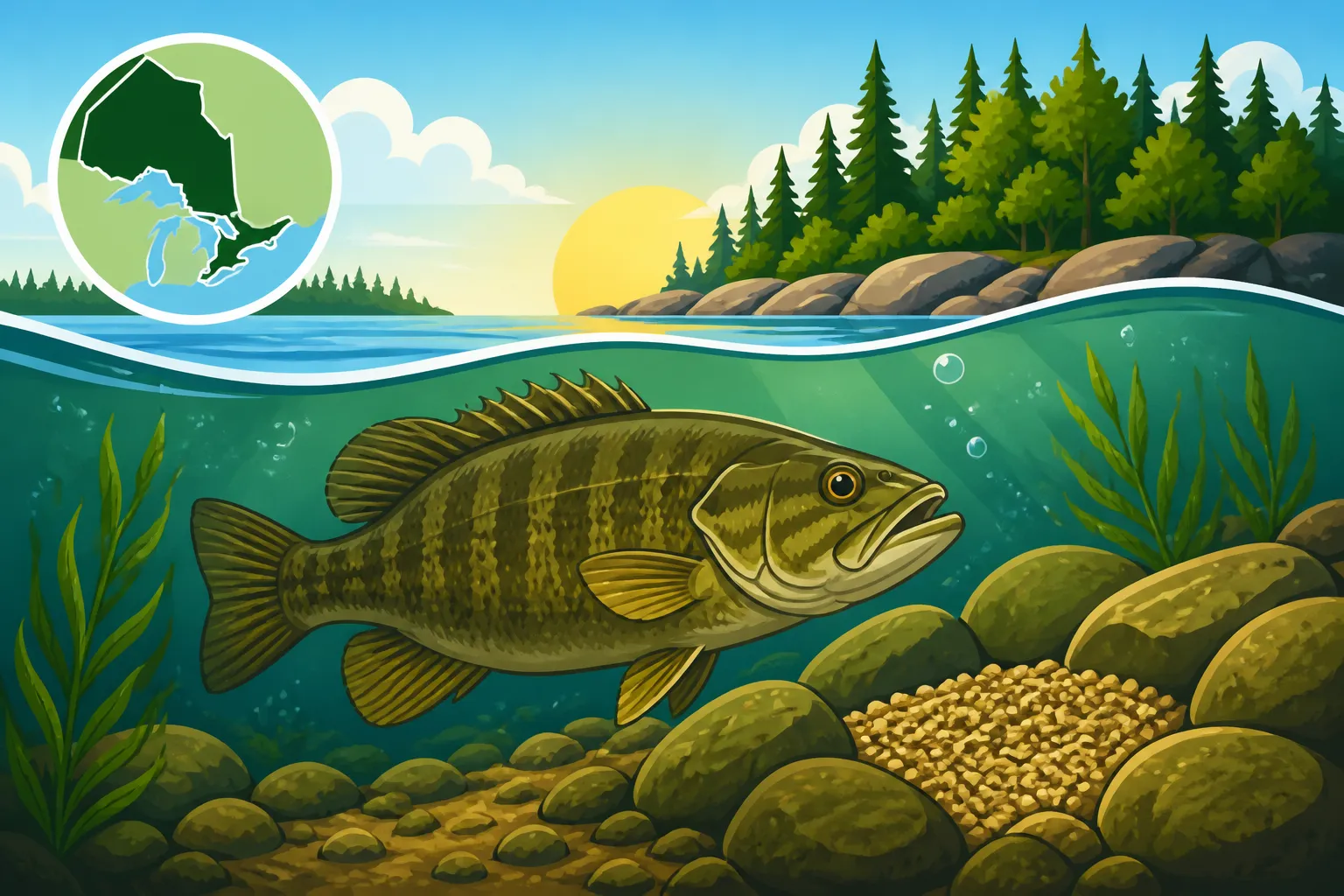
The actual spawning event for smallmouth bass in Ontario typically kicks off when water temperatures consistently reach the 55-65°F (13-18°C) range. This is the sweet spot they're looking for. The male bass, being the primary architect and guardian, will move into very shallow, protected areas, often with a firm bottom of gravel, sand, or small rocks. Think of those calm bays, sheltered shorelines, or even the lee side of islands in places like Georgian Bay or the Kawartha Lakes. He'll create a circular "redd" or nest by fanning out silt and debris with his tail, exposing clean substrate.
Once the nest is ready, he'll entice a female (sometimes multiple females) to deposit her eggs there. The eggs are adhesive and stick to the clean bottom. After the female has laid her eggs, her job is done, and she typically leaves the area, moving into slightly deeper water to recover. The male, however, becomes the vigilant guardian. He'll stay over the nest, fanning the eggs to keep them oxygenated and free of silt, and aggressively defending them against any perceived threat – from panfish trying to eat the eggs to curious anglers' lures. This guarding phase can last for several weeks, depending on the water temperature and how quickly the eggs hatch. Anglers should be particularly mindful during this time, as disturbing a guarding male can leave the eggs vulnerable, impacting the future population. Smallmouth Bass Habits on Lake Erie explores how these fish behave in specific large lake environments.
The Post-Spawn Period: Recovery and Renewed Feeding
Once the eggs hatch and the fry disperse from the nest, the male smallmouth's parental duties are over. Both male and female bass enter a post-spawn recovery phase. They've expended a tremendous amount of energy – the females laying eggs and the males building and guarding nests. Their initial instinct is to move to slightly deeper, cooler water to recuperate. They might be lethargic for a short period, often less interested in feeding, which can be a frustrating time for anglers expecting active fish.
However, after a brief rest, usually a week or two, their hunger returns with a vengeance. They need to rebuild their energy reserves. During this time, you'll find them starting to move towards summer feeding grounds, often relating to structure like submerged logs, rock piles, or developing weed lines in slightly deeper water than the spawning flats. This period can also offer some excellent fishing opportunities, as the bass are once again actively feeding, albeit sometimes more spread out. Lighter presentations, such as soft plastics, wacky worms, or smaller crankbaits, can be very effective as they seek easier meals. Understanding this pattern helps anglers target them effectively without disrupting the critical spawning process.
Key Factors Influencing Smallmouth Bass Spawning Dates
While we can talk about general temperature ranges, smallmouth bass spawning isn't a calendar-driven event. It's a complex interaction of environmental cues that can vary significantly across Ontario's vast and diverse landscapes.
Water Temperature: The Primary Trigger
There is no single factor more important than water temperature for initiating the smallmouth bass spawn. As mentioned, the magic range is typically 55-65°F (13-18°C). However, it's not just about hitting that temperature once; it needs to be sustained. A warm spell followed by a sudden cold snap (a common occurrence in Ontario spring weather!) can delay the spawn or even cause bass to abandon nests temporarily. They are incredibly sensitive to these changes.
For example, a lake like Lake Simcoe, being large and deep, might warm up slower than a shallower, smaller inland lake in the same region. Similarly, lakes in Northern Ontario's Fisheries Management Zone 2, such as Rainy Lake, will naturally experience later spawning than those in the warmer southern zones like FMZ 20. Keeping a close eye on local water temperatures using a reliable thermometer is far more effective than relying on a calendar date. You can find excellent waterproof thermometers on Amazon that clip right onto your boat or kayak. These variations are why Ontario’s fishing regulations have different opening dates for bass across different zones, as detailed in our guide on Ontario Bass Opener Dates by Zone.
Photoperiod and Weather Patterns
While temperature is king, the increasing length of daylight (photoperiod) also plays a subtle role, signaling to the fish that spring is truly here. Consistent sunny days that warm the shallow water contribute to the overall readiness of the bass. Beyond that, stable weather patterns are crucial. Prolonged periods of high winds can churn up shallow spawning areas, cooling the water and creating murky conditions that make it difficult for male bass to guard nests effectively. Heavy rainfall can also cool waters and increase turbidity, pushing bass off their beds. Conversely, a week of calm, sunny weather will often kick the spawn into high gear.
Consider how a persistent cool spring, or one marked by frequent cold fronts, can dramatically push back spawning times. This is why some years the bass opener feels like a pre-spawn bite, and other years, they're already deep into post-spawn. Learning to read these environmental cues rather than just looking at a calendar is a hallmark of a seasoned Ontario angler. This adaptability is key for success, especially when you're trying How to Fish a River for Smallmouth Bass where water levels and currents also play a role.
Location, Location, Location: Shallow, Protected Areas
Smallmouth bass are quite particular about their spawning habitat. They seek out shallow areas, typically 2 to 10 feet deep, that offer protection from strong winds, currents, and predators. These spots usually have a firm bottom composition of gravel, sand, or small rocks, which is ideal for egg adhesion and fanning. You'll often find these nests in:
- Shallow bays: Especially those with dark bottoms that absorb sunlight, warming the water faster.
- Lee sides of islands or points: Offering shelter from prevailing winds.
- Rocky flats and shoals: Providing plenty of material for nest building and crevices for protection.
- Near submerged wood or docks: These structures can offer additional shelter and ambush points for guarding males.
Understanding these preferred locations is critical for both finding fish during the pre-spawn and being extra cautious during the actual spawning period. You might even spot the tell-tale circular fanned-out nests if you're wearing good polarized sunglasses, especially in clearer lakes, allowing you to avoid casting into them. Many anglers exploring new waters find these spots via detailed maps or even by just observing their surroundings carefully from their Best Kayak for Lake Erie or other watercraft.
Angling Considerations During the Smallmouth Bass Spawning Period
Knowing when smallmouth bass spawn isn't just academic; it profoundly impacts how, and if, you should fish for them. Ontario's regulations are designed to protect these fish during their most vulnerable time, but ethical angling goes beyond just following the rules.
Ontario's Bass Season Opening Dates
Ontario has specific opening dates for bass season, which are designed to allow most smallmouth bass to complete their spawning cycle before they can be legally targeted. These dates vary by Fisheries Management Zone (FMZ). Generally, southern zones open earlier, sometimes as early as the third Saturday in June, while northern zones might not open until July.
It is absolutely crucial to check the current Ontario Fishing Regulations Summary for the specific FMZ you plan to fish. Fishing for bass outside of the open season is illegal and carries significant penalties, including fines and potential equipment seizure. Even if you're targeting other species, if you accidentally catch a bass out of season, you must release it immediately and with as little harm as possible. This commitment to conservation is paramount for ensuring healthy fish populations for generations to come. You can find detailed information on these dates in Ontario Fishing Season Dates by Zone.
Ethical Angling and Catch-and-Release Practices
Even when bass season is open, if you encounter actively spawning or guarding smallmouth, ethical angling dictates extreme caution. Many anglers choose to avoid targeting bass on beds entirely. Why? Because when you catch a male bass off its nest, even for a short time, you leave the eggs or fry vulnerable to predators like sunfish, crayfish, and other opportunistic feeders. This can dramatically reduce the spawning success for that nest.
If you do accidentally hook a guarding bass, land it quickly, handle it minimally with wet hands, remove the hook gently, and release it immediately back to its nest. Minimizing its time away from the nest is critical. Circle hooks can be incredibly useful for reducing deep hooking, making for easier, quicker releases. Always prioritize the fish's well-being. Practicing proper catch-and-release techniques is vital for the long-term health of our fisheries, and it’s a topic covered extensively in Muskie Catch and Release Survival Tips – principles that apply broadly to all sport fish.
| Spawning Phase | Typical Water Temperature | Bass Behaviour | Angling Impact | Best Practices |
|---|---|---|---|---|
| Pre-Spawn | 45-55°F (7-13°C) | Moving to shallows, aggressive feeding | Excellent fishing, active and hungry fish | Target transition zones, use aggressive lures (crankbaits, jerkbaits) |
| Spawning | 55-65°F (13-18°C) | Males building/guarding nests, females laying eggs | Season often closed; if open, avoid targeting beds | Observe, respect nests, minimize disturbance, quick release if accidental |
| Post-Spawn Recovery | 60-70°F (15-21°C) | Initial lethargy, then renewed feeding, moving to deeper | Can be slower fishing initially, then good as they recuperate and feed again | Target slightly deeper cover, use varied presentations (soft plastics, smaller lures) |
Gear and Tactics: Adapting to the Spawn
Your fishing strategy needs to adapt significantly through the different spawning phases.
Pre-Spawn: This is when bass are often most aggressive. Think about power fishing techniques. Medium-heavy to heavy action spinning or baitcasting rods are ideal for casting larger lures. Crankbaits that dive to different depths, lipless crankbaits, spinnerbaits, and jerkbaits are all excellent choices. Look for rocky points, breaklines, and the mouth of bays where smallmouth are staging. Colours mimicking baitfish like shiners or perch are often effective. Best Topwater Fishing for Smallmouth Bass in Ontario can also be fantastic during the tail end of pre-spawn as fish become very active in the warming shallows.
During the Spawn (if legally open and you choose to fish away from beds): If you're fishing areas where you suspect spawning is happening but not directly on beds, you might find some post-spawn females already moving out or males cruising nearby. Finesse techniques can be more effective during this period. Drop shot rigs, wacky-rigged worms, or small tubes fished slowly can entice less aggressive fish. Focus on the edges of known spawning flats or slightly deeper structure adjacent to them. Remember, the key is to minimize disturbance and avoid targeting bedding fish directly. Quality tackle, available through outlets like Amazon, ensures you have the right tools for delicate presentations.
Post-Spawn: As bass recover and begin their summer patterns, they'll still be hungry but might be spread out more. You can start to use a wider array of lures. Topwater baits become excellent as the water warms, especially during low light conditions. Jigs, Carolina rigs, and Texas rigs are great for working submerged structure like weed edges, rock piles, and brush. Consider using lighter line like fluorocarbon leaders for clear water conditions, which can be easily found on Amazon along with a selection of soft plastics that mimic crawfish or baitfish. Always keep an eye on water temperatures, as fish will adjust their depth and activity levels accordingly. For more advanced tactics, consider Best Bass Fishing Techniques for Georgian Bay.
Protecting Spawning Bass and Ensuring Future Fisheries
The long-term health of Ontario's smallmouth bass populations relies heavily on responsible angling practices, especially during the crucial spawning period. It's not just about what's legal; it's about what's right for the fish and the future of our sport.
The Role of Regulations and Conservation
Ontario's Ministry of Natural Resources and Forestry (MNRF) sets fishing regulations, including season dates and bag limits, specifically to protect fish populations. The variable bass opening dates across different FMZs are a prime example of this, acknowledging that spawning cycles differ based on geography and climate. These regulations are informed by scientific research on fish biology and population dynamics. Adhering to these rules is the most fundamental way every angler contributes to conservation. Beyond that, supporting local conservation efforts, participating in clean-up days, and advocating for healthy aquatic habitats all play a vital role.
Understanding regulations like those related to Ontario Bag and Possession Limits by Species helps ensure you're always fishing legally and sustainably. Many anglers also consider joining local angling clubs, which often engage directly with conservation projects and help educate members on best practices.
Habitat Preservation: More Than Just Water
Smallmouth bass, like all fish, depend on healthy habitats to thrive. This means not just clean water, but also intact shorelines, diverse bottom compositions, and unpolluted tributaries. Spawning success is directly tied to the availability of suitable nesting sites – clean gravel, sand, and rock in protected, shallow areas. Erosion from shoreline development, pollution, or excessive boat traffic in shallow bays can degrade these critical spawning grounds.
As anglers, we have a responsibility to be stewards of the environment. This means being mindful of our wake in shallow areas, properly disposing of trash, and supporting initiatives that protect and restore shorelines. Recognizing that healthy habitat is the foundation of a robust fishery empowers us to make choices on and off the water that benefit the smallmouth bass and countless other species. Our efforts extend to understanding the broader picture of Ontario Fisheries Management Zones, Explained and how regional factors influence fish health.
Educating Fellow Anglers
One of the most powerful things any angler can do is share knowledge and encourage responsible practices among their peers. If you see someone unwittingly disturbing a bass bed, or fishing illegally, a friendly, educational conversation can go a long way. Many new anglers simply aren't aware of the nuances of spawning behaviour or the impact of their actions.
By understanding "When smallmouth bass spawn in Ontario" and sharing that knowledge, we help foster a community of responsible, conservation-minded individuals. After all, the joy of fishing is best shared, and that includes ensuring there are plenty of smallmouth for future generations to enjoy chasing. Keep learning, keep sharing, and keep advocating for the incredible fishing opportunities we have here in Ontario.
Disclaimer
This article is for general informational purposes only and does not constitute professional advice. Laws, prices and regulations vary by location and change over time. Consult a qualified professional for guidance on your specific situation.