Best boat for shallow rocky rivers
There's nothing quite like the allure of those lesser-known Ontario rivers, with their promise of untouched fishing grounds and serene wilderness. But let's be honest, getting to them can be a real headache. The worry of scraping your hull on hidden rocks, getting stuck in mere inches of water, or simply not having the right vessel to navigate those unpredictable currents and shallow stretches is a frustration many anglers know all too well. This guide is here to unravel the mystery, helping you confidently choose the ideal boat designed to conquer Ontario's shallow, rocky rivers, allowing you to focus on the fish, not the fear of costly damage.
Understanding the Unique Challenges of Ontario's Shallow, Rocky Rivers
Fishing in Ontario's vast network of rivers presents a distinct set of challenges that can make or break your trip. These aren't your typical deep, wide-open lakes. We're talking about dynamic environments where water levels can fluctuate, currents can be swift, and hidden obstacles lurk just beneath the surface. Navigating these waters safely and effectively requires a specific type of boat that's built for resilience and shallow-water prowess.
Variable Water Levels and Hidden Hazards
One of the biggest headaches when exploring Ontario's rivers is the unpredictability of water levels. A river that looks perfectly navigable in the spring might be a series of frustratingly shallow riffles and exposed rock gardens by late summer. Rain events or lack thereof can drastically change conditions overnight. This means your boat needs to have an incredibly shallow draft – the minimum amount of water it needs to float – to get you through those skinny sections without constantly dragging bottom.
Beyond the shallows, the rivers are often littered with hazards you can't see until it's too late. Submerged rocks, fallen timber, old beaver dams, and even discarded debris can quickly turn a peaceful outing into a costly repair job. A robust hull and, ideally, a propulsion system that minimizes vulnerability to impact are paramount. Think about those times you've heard a grinding noise under your boat on a lake – now imagine that sound amplified tenfold as you try to navigate a rock-strewn rapids. It's enough to make even the most seasoned angler break into a sweat.
Navigating Currents and Tight Spaces
Ontario rivers, from the rushing Ottawa River to the winding French River, often feature strong currents, especially around rapids or choke points. A boat designed for these conditions needs to be maneuverable and stable, capable of holding its line against the flow without being tossed around like a toy. You'll also encounter tight bends, narrow channels, and areas bordered by dense vegetation or steep banks. A boat that's too wide or unwieldy will severely limit your access and make precise navigation a constant battle. Imagine trying to navigate a sharp bend with a strong cross-current, all while trying to avoid a jagged rock wall – a nimble boat makes all the difference.
Another consideration is the access points. Many of the best shallow, rocky rivers don't have fancy marinas or wide boat launches. You might be launching from a muddy bank, a rocky shoreline, or even dragging your boat a short distance. This speaks to the need for a boat that's not only capable in the water but also manageable out of it, whether you're loading it onto a trailer or pulling it ashore for a quick portage.
Top Boat Types for Ontario's Rocky Rivers
When it comes to tackling those challenging river environments, not all boats are created equal. You need something purpose-built or highly adaptable. Forget about your deep-V bass boat or your pontoon cruiser; these waters demand specialized vessels.
Jon Boats: The Workhorse of Shallow Water
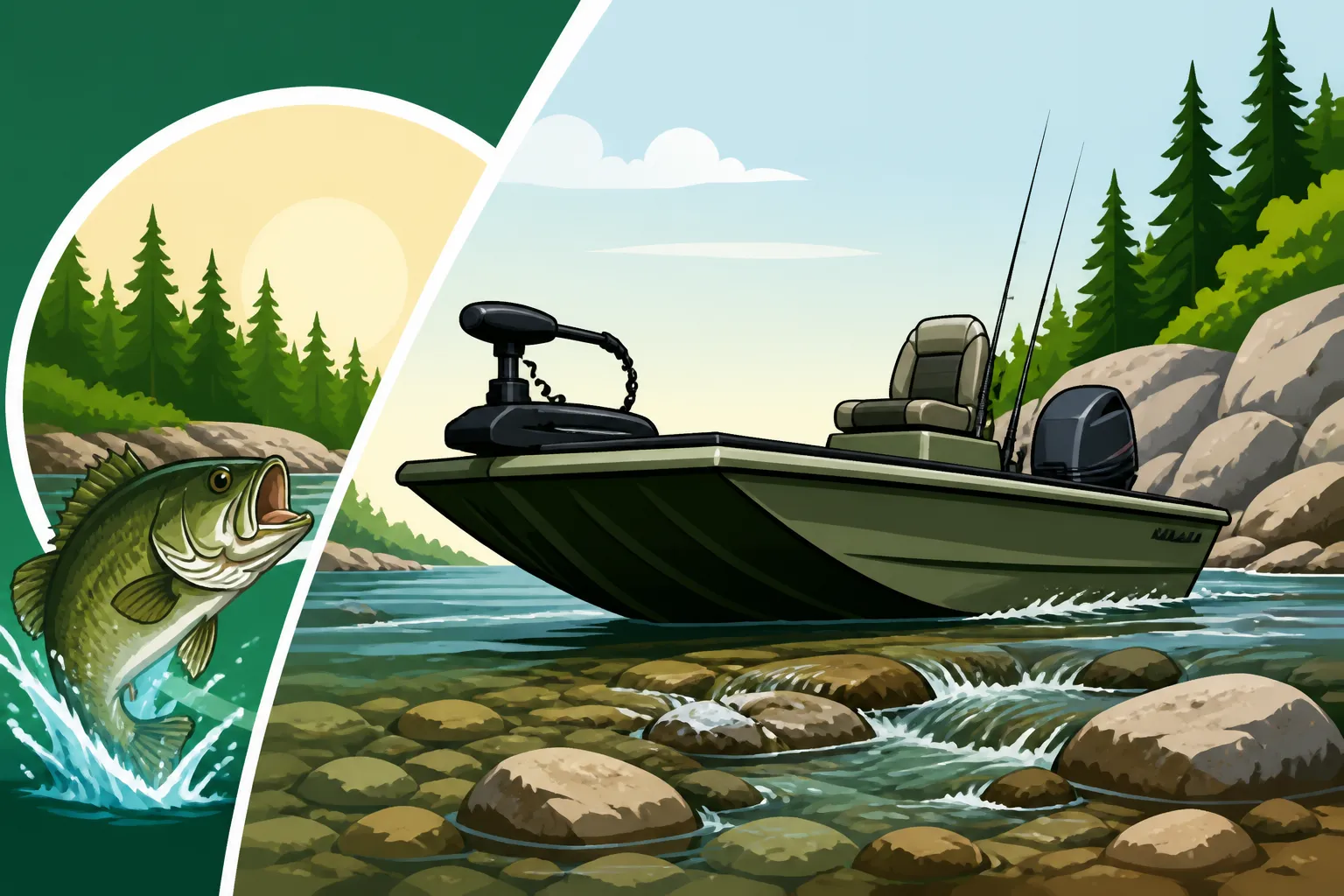
Jon boats are often the first choice for anglers looking to navigate shallow, rocky rivers, and for good reason. Their flat-bottomed design allows them to float in incredibly shallow water, often just a few inches, making them perfect for skinny water conditions. They're typically constructed from aluminum, which offers a fantastic balance of durability and lighter weight. A good quality aluminum jon boat can take a serious beating from rocks and still keep going.
One of the greatest advantages of a jon boat is its simplicity and customization potential. You can start with a basic hull and add what you need: a simple bench seat, a trolling motor, or even a small casting deck. This makes them incredibly versatile. However, their flat bottom, while great for shallow draft, means they don't handle chop or waves particularly well. On a windy day on a wider section of river, you might find yourself getting a bit wet. When considering one, look for thicker gauge aluminum for increased durability against rock impacts. Many anglers who fish really gnarly rivers will even weld or bolt on additional skid plates to the hull for extra protection. You might find a great selection of these specialized boats at stores like Bass Pro Shops, which often carry a range of brands known for their rugged construction.
Boats with Jet Drives: Propeller-Free Prowess
For those who want to navigate shallow rivers with confidence and speed, boats equipped with jet drives are an excellent option. Instead of a propeller hanging down beneath the hull, a jet drive sucks water in and expels it out the back, creating thrust. This means there's no lower unit or prop to hit rocks or get tangled in weeds. You can literally run in water only a few inches deep, as long as the intake isn't sucking air or debris.
Jet boats often come in two main forms: purpose-built jet boats (sometimes called "river sleds" or "prop-less boats") or standard outboard motors converted with a jet lower unit. The latter is a popular choice, turning a regular outboard into a shallow-water machine. The trade-off is often a reduction in horsepower compared to a prop-driven equivalent and slightly higher fuel consumption, as the jet drive is less efficient. You also need to learn a specific driving technique, as they don't steer quite like prop boats, especially at low speeds. But for accessing those remote stretches of river where a prop would be suicidal, a jet drive is unmatched.
Heavy-Duty Inflatable Rafts or Boats
While not the first thing many anglers think of, a heavy-duty inflatable raft or a robust inflatable boat can be surprisingly effective on shallow, rocky rivers, especially for smaller crews or those prioritizing portability. Modern inflatable fishing boats are incredibly tough, often made from multi-layer PVC or Hypalon, designed to withstand abrasions and punctures. Their soft, flexible hulls can bounce off rocks that would damage a rigid boat, and their extremely shallow draft allows them to glide over very little water.
These boats are also highly portable. They can be deflated and packed down for transport, making them ideal for accessing remote stretches of river that require portaging or where traditional boat launches are nonexistent. Think of those amazing Canoe Fishing Routes in Ontario where a heavy boat would be impossible. The downsides typically include slower speeds (they're not usually designed for powerful outboards), reduced stability in strong currents compared to a jon boat, and susceptibility to punctures from sharp, jagged rocks if not built with extreme durability in mind. If you opt for an inflatable, ensure it's specifically rated for whitewater or heavy-duty use, not just a casual recreational model.
| Boat Type | Pros | Cons | Ideal For |
|---|---|---|---|
| Jon Boat | Very shallow draft, durable aluminum, customizable, relatively affordable | Poor in choppy water, can be noisy, less nimble than a jet boat | Anglers needing robust, versatile, shallow-water access on calmer river sections |
| Jet Boat / Outboard Jet | No propeller to hit, extremely shallow running, powerful | Higher fuel consumption, less efficient, requires specific driving skills, often more expensive | Serious river anglers needing speed and ultimate shallow-water access over consistent rapids/currents |
| Heavy-Duty Inflatable | Extremely shallow draft, highly portable, flexible hull resists impact, can be very tough | Slower speeds, less stable in strong currents, can be punctured by very sharp objects | Anglers prioritizing portability and ultimate shallowest water access, often with less speed |
Key Features to Look For in a River Boat
Choosing the right type of boat is just the beginning. Within each category, specific features can greatly enhance your river fishing experience and protect your investment. These details are what separate a good river boat from a great one.
Hull Material and Design for Durability
For shallow, rocky rivers, the material and design of your boat's hull are paramount. As mentioned, aluminum is a top contender for rigid boats due to its excellent strength-to-weight ratio and ability to flex and rebound from impacts without permanent damage. Look for thicker gauge aluminum (e.g., .100 gauge or higher) on the bottom and sides for maximum resilience. Some manufacturers also offer boats with fully welded hulls, which are generally stronger and more watertight than riveted construction, especially under constant stress from impacts.
Beyond aluminum, some specialized river boats are made from extremely tough polyethylene. This rotomolded plastic is incredibly impact-resistant and flexible, often able to absorb impacts that would dent or even puncture aluminum. It's usually heavier than aluminum but virtually indestructible. The hull design should prioritize a flat or gently modified V-hull at the bow transitioning to a flat bottom. This ensures that incredibly shallow draft while still offering some ability to cut through minor chop or debris. A true deep-V hull is simply not suitable for these conditions.
Propulsion Systems: Jet Drive or Specialized Outboard
We've already touched on jet drives, and they truly are a game-changer for rocky rivers. However, if a full jet drive isn't in your budget or preferred, consider a standard outboard motor carefully. If you do go with a prop, ensure it's a smaller, high-thrust propeller with good weedless properties, and always carry spare props and the tools to change them quickly. A prop guard or a transom-mounted "kick-up" plate can also offer some protection, allowing the motor to automatically tilt up if it strikes an object. For really slow, technical stretches or ultra-shallow pockets, a high-quality electric trolling motor might be indispensable. Many anglers find great deals on these accessories on Amazon, often including mounting brackets and wiring kits.
For quiet access, especially when stalking wary fish in smaller streams or back channels, an electric trolling motor is a fantastic addition. Brands like Minn Kota and MotorGuide offer robust bow-mount or transom-mount options that can run in very little water and provide stealthy propulsion. Just remember their range is limited by battery life, so they're best used in conjunction with a main engine or for specific quiet fishing scenarios. If you're looking for Best Trolling Motor for a Fishing Kayak, many of those considerations also apply to smaller river boats.
Essential Accessories for River Fishing
Outfitting your boat properly can make all the difference on a river. Skid plates or UHMW (Ultra High Molecular Weight polyethylene) bottom coatings are fantastic for aluminum boats, adding an extra layer of protection against abrasive rocks. A quality Best Anchor System for River Fishing is absolutely critical, as current can quickly pull you downstream. A grapple anchor with a sufficient length of rope is usually a solid choice, allowing you to quickly deploy and retrieve it.
Storage that keeps your gear dry is also important, especially if you're taking spray from the bow or running through light rapids. Watertight compartments or dry bags are invaluable. And don't forget personal safety gear. Always have appropriate life jackets, especially in strong currents, and consider a wading staff if you plan to get out of the boat in shallow areas. Remember, safety always comes first when venturing into these wilder waters, especially when you might be a long way from help. Ontario Boating Laws for Anglers provides crucial details on required safety equipment.
Outfitting Your River Boat for Success
Once you've picked your ideal river boat, it's time to equip it for maximum enjoyment and safety. A well-outfitted boat can turn a good fishing trip into a truly memorable one, especially on challenging waterways.
Navigation and Electronics for River Systems
Unlike open lakes where GPS is often about finding structure, on rivers, it's about staying on course and avoiding known hazards. A reliable GPS unit with detailed mapping of river channels and depths can be a lifesaver. While bathymetric charts for large lakes are common, detailed river maps can be harder to come by, so research is key. Mark waypoints for known shallow spots, rapids, or submerged dangers on your first few runs. Many modern fish finders also offer excellent GPS capabilities, allowing you to combine your navigation and fish-finding tools into one unit. Features like side-imaging or down-imaging can also help identify underwater obstacles before you hit them, giving you precious time to react.
For communications, especially on remote rivers where cell service is spotty, a marine VHF radio or even a satellite messenger device is a wise investment. These can be crucial in an emergency, allowing you to call for help even when off the grid. Never assume you'll have cell signal; many of the best river fishing spots are truly out there.
Rods, Reels, and Tackle for River Species
The fish in shallow, rocky rivers often behave differently than their lake counterparts. For species like Smallmouth Bass Fishing in Ontario or Northern Pike Fishing in Ontario, you might be casting into tight cover, around rocks, or making precise presentations in current. This often calls for shorter, more accurate casting rods. A good quality spinning rod and reel combo is versatile for most river species. For example, a medium-heavy spinning rod around 6'6" to 7' is a fantastic all-around choice.
Your tackle should be robust and designed for snags. Consider using weedless hooks, jig heads with weed guards, and lures that can bounce off structure without getting hung up easily. Carry extra terminal tackle – you will lose lures in these environments. Heavy-duty fluorocarbon or braided line with a stout leader is a must to stand up to abrasion from rocks and to haul fish out of heavy current. If you're fly fishing for trout in some of the smaller, clearer rivers, remember that presentation is key, and you'll want to choose fly patterns that imitate the local insect life. Fly Fishing for Trout in Ontario offers great insights into suitable gear and techniques.
Preparing for the Unexpected
River fishing, especially on shallow, rocky stretches, requires a healthy dose of preparedness. Always pack a comprehensive emergency kit. This should include first aid supplies, a knife, fire-starting tools, extra water and food, and emergency shelter. A spare anchor, extra rope, and tools for minor boat repairs (like a patch kit for inflatables, or basic engine tools) are also highly recommended. A small, portable air compressor can be a lifesaver for inflatable boats.
Dress in layers, as river environments can see rapidly changing weather, and durable, quick-drying clothing is a must. Wading boots with good traction are essential if you plan to get out and wade. Most importantly, always let someone know your float plan – your intended route, where you're launching and taking out, and when you expect to return. Share this information with a trusted friend or family member who knows when to raise an alarm if you don't check in.
Navigating Ontario's Lesser-Known River Gems
With the right boat and preparation, Ontario's shallow, rocky rivers can unlock some truly spectacular fishing experiences. These hidden gems often hold healthy populations of fish that see less pressure than their lake-dwelling cousins.
Scouting and Planning Your River Trip
Successful river fishing begins long before you launch your boat. Thorough research and scouting are critical. Utilize online resources, topographical maps, and satellite imagery to identify potential launch points, rapids, shallow areas, and promising fishing spots. Look for areas where feeder creeks enter the main river, deeper pools below rapids, or eddy lines where fish can rest out of the main current. Local knowledge is invaluable, so chat with other anglers at tackle shops or online forums.
Consider doing a "dry run" or an initial scouting trip with a less expensive or more portable vessel (like a kayak or canoe) to get a feel for the river's character before committing your specialized powerboat. Pay attention to water color, current speed, and any visible hazards. Knowing what you're getting into dramatically reduces the stress and risk on your main fishing trip. Remember, river conditions can change, so always be observant and ready to adapt your plan.
Respecting the Environment and Regulations
When exploring these pristine river environments, it's crucial to practice ethical angling and respect the delicate ecosystems. Pack out everything you pack in – leave no trace. Be mindful of wildlife and local residents. If you're on a narrow river near cottages or homes, maintain a respectful distance and keep noise levels down.
Always be aware of and adhere to Ontario Fishing Regulations Explained. This includes understanding specific zone regulations, bag and possession limits, and any special restrictions on certain river sections (e.g., catch-and-release only, artificial lures only). Protecting these resources ensures that future generations of anglers can also enjoy the unique challenge and beauty of Ontario's shallow, rocky rivers. Understanding details like Ontario Walleye Opener Dates by Zone or Ontario Bass Opener Dates by Zone is crucial, as river fish can be particularly sensitive to pressure during spawning periods.
The Joy of Discovery
There's a special kind of satisfaction that comes with successfully navigating a challenging river and finding those untouched fishing holes. It's not just about the fish you catch, but the journey, the problem-solving, and the connection to nature that these unique environments offer. Whether you're chasing elusive brook trout in a clear, rocky stream or battling a hard-fighting smallmouth bass around submerged timber, having the right boat gives you the freedom to explore with confidence. So, get out there, research those rivers, choose your vessel wisely, and experience a whole new side of Ontario fishing.
Disclaimer
This article is for general informational purposes only and does not constitute professional advice. Laws, prices and regulations vary by location and change over time. Consult a qualified professional for guidance on your specific situation.