How to Catch Walleye in Ontario
One of the most rewarding, yet sometimes frustrating, experiences in Ontario fishing is chasing walleye. These elusive, delicious fish can be incredibly finicky, leaving anglers scratching their heads wondering where they went and what they're biting on. This comprehensive guide is here to demystify walleye fishing in our incredible province, offering seasoned advice and practical tips to help you consistently land these prized fish, no matter the season or the water you're on.
Understanding Ontario Walleye
Before you even think about casting a line, getting to know the walleye itself is crucial. They aren't just any fish; they have distinct behaviors, preferences, and patterns that, once understood, can dramatically increase your success. Think of it like learning to speak their language – once you do, communication becomes a whole lot easier.
Walleye Biology and Behavior
Walleye (scientific name: Sander vitreus) are a fascinating freshwater fish known for their distinctive large, reflective eyes, which are perfectly adapted for low-light conditions. This is why you often hear anglers talking about "walleye choos" at dawn, dusk, or on cloudy days. Their eyesight is incredibly sensitive, allowing them to hunt effectively when other fish are less active. They're primarily piscivores, meaning they feed on other fish, with their diet often consisting of minnows, shiners, perch, and smelt, depending on the available forage in their specific habitat. Understanding what they're eating in a particular lake or river can be a huge clue to what lures or baits to use.
Beyond their eyes, walleye are also known for their schooling behavior, especially in larger bodies of water. If you find one walleye, there's a very good chance there are more nearby. This makes searching for them a bit like a treasure hunt; once you locate the school, the action can be fast and furious. However, they can also be solitary, particularly the larger, older fish. Their keen senses and often cautious nature mean they can spook easily, so subtle approaches and stealth can make a big difference, especially in heavily pressured waters. They aren't typically known for explosive, acrobatic fights like a bass or a trout, but rather a solid, determined pull, often feeling like a heavy weight on the end of your line.
Habitat and Preferred Structures
Walleye are incredibly adaptable and can be found in a wide variety of Ontario waters, from vast Great Lakes expanses to smaller inland lakes and winding rivers. However, they consistently gravitate towards certain types of habitat and structure. Generally, they prefer cooler, deeper waters during the day, especially as summer progresses, seeking out thermal refuges. This doesn't mean they're always in the deepest part of the lake; rather, they're often found relating to structure that offers access to cooler water, ambush points, and proximity to forage.
Key structures to target include rocky points, humps, reefs, and shoals. These features provide excellent cover and current breaks, making them ideal ambush points for unsuspecting baitfish. Deeper weed lines, particularly those with distinct edges or holes, are also prime walleye real estate, especially in shallower lakes where weeds provide both cover and oxygen. In rivers, look for current seams, eddies behind large boulders or islands, and deeper pools, especially those with gravel or rock bottoms. Transitions from soft to hard bottom are also critical, as are submerged wood, fallen trees, and bridge pilings. Don't overlook the obvious, but also scan your sonar for subtle changes that might indicate a hidden drop-off or a small rock pile that could be holding fish. Understanding Where to Find Walleye in Ontario can significantly narrow down your search.
Spawning Habits and Post-Spawn Recovery
The annual spawning ritual is a critical time for walleye, dictating their movements and feeding patterns for a significant part of the spring. Walleye typically spawn in the spring, shortly after ice-out, when water temperatures rise to around 6-10°C (43-50°F). They are broadcast spawners, meaning they release their eggs and milt over gravel, rock, or rubble bottoms in rivers, shallow reefs, or along wave-washed shorelines. These areas offer good water circulation and protection for the eggs. The males usually arrive first, clearing small areas, followed by the females. They don't build nests or guard their eggs, which means the eggs are vulnerable to predation and environmental changes.
Following the spawn, walleye enter a recovery period, often referred to as the post-spawn. During this time, they're typically less aggressive as they regain their strength, though they will still feed opportunistically. Females especially need to rebuild their energy reserves after expending so much during spawning. As water temperatures continue to rise, they'll gradually move from their spawning grounds to more traditional feeding areas, often staging on nearby drop-offs or deeper flats before transitioning to their summer patterns. Knowing Walleye Spawning Season in Ontario is crucial, as fishing pressure around these sensitive times can impact future populations. During the immediate post-spawn, targeting transition areas or subtle structure near spawning sites can be effective, as they won't be far, but they'll be looking for an easy meal without expending too much energy.
Essential Gear for Walleye Fishing in Ontario
Alright, now that we understand our target, let's talk tackle! Having the right tools for the job can make all the difference between a frustrating day on the water and one filled with memorable catches. Walleye fishing doesn't necessarily require a fortune in gear, but thoughtful selection will certainly put the odds in your favor.
Rods, Reels, and Line Selection
For walleye, versatility is key. You'll want a setup that can handle various techniques, from casting jigs to trolling crankbaits. A good starting point is a medium-light to medium power spinning rod, typically 6'6" to 7'6" in length, with a fast action tip. This combination offers enough backbone to fight a decent fish, yet the sensitive tip allows you to detect those subtle walleye bites that feel like a mere "tick" or added weight on your line. Brands like St. Croix or Fenwick offer excellent options that are popular with Ontario anglers. For reels, a 2500 or 3000 series spinning reel is ideal, providing a smooth drag system and enough line capacity. You can find many reliable choices on Amazon that won't break the bank.
Line selection is another critical component. Many walleye anglers swear by braided line for its incredible sensitivity and strength-to-diameter ratio. A 10-15 lb test braid is usually sufficient, allowing you to feel every bump and bite. However, because braid is visible, it's almost always paired with a fluorocarbon leader, typically 6-10 lb test, which is virtually invisible underwater and offers good abrasion resistance against rocks and zebra mussels. Some anglers still prefer monofilament, especially for trolling, due to its stretch properties, which can be forgiving when a walleye strikes a crankbait hard. Always match your leader weight to your presentation and the water clarity; clearer water often calls for lighter, less visible fluorocarbon.
Lures and Baits: The Walleye Toolkit
This is where things get exciting! Walleye are opportunistic feeders, so having a diverse array of lures and baits is essential. Jigs are arguably the most versatile walleye lure. From hair jigs to soft plastic-tipped jigs, they can be cast, jigged vertically, or even trolled. Popular soft plastic trailers include Berkley Gulp! Minnows, grub tails, or paddletail swimbaits in natural colors like white, chartreuse, or perch patterns. When jigging, sometimes just a plain lead head tipped with a live minnow is all you need.
Crankbaits are indispensable for covering water, especially when trolling or casting shallow flats. Choose a variety of diving depths and colours. For Best Baits for Walleye on Lake Erie, anglers often use deep-diving crankbaits in bright colours during stained conditions and more natural patterns in clear water. Rapala Shad Raps, Berkley Flicker Shads, and Storm ThunderSticks are perennial favourites. For shallower presentations, stickbaits or shallow-running crankbaits can be highly effective during low-light periods. Live bait rigs, such as a simple crawler harness (spinner rig with a nightcrawler) or a slip bobber with a minnow, are also incredibly effective, especially when fish are sluggish or when you need to keep bait in the strike zone longer. Remember, the key is to experiment until you find what the walleye are keying in on that particular day.
Electronics and Accessories for Success
In modern walleye fishing, electronics are no longer a luxury but a powerful tool. A quality fish finder, whether it's a standalone unit or integrated into your boat's console, will dramatically improve your ability to locate structure, identify baitfish schools, and mark individual walleye. Look for units with good down imaging and side imaging capabilities, like those from Humminbird or Lowrance, to get a clear picture of the underwater world. GPS mapping is also crucial for marking waypoints, navigating safely, and returning to productive spots.
Beyond your main fish finder, a good electric trolling motor (Minn Kota Ulterra or Terrova models are popular choices) with GPS Spot-Lock technology is a game-changer for precise boat control, allowing you to hold position over a spot or follow a contour perfectly, even in wind or current. Other essential accessories include a long-handled landing net (walleye have sharp teeth and can be surprisingly feisty boat-side), a good pair of pliers or forceps for hook removal, a livewell or cooler to keep your catch fresh (if you plan to keep fish), and, of course, a valid Ontario Fishing License Guide for 2026. Don't forget polarized sunglasses to cut glare and help you spot shallow structure or even cruising fish.
Mastering Walleye Techniques Throughout the Seasons
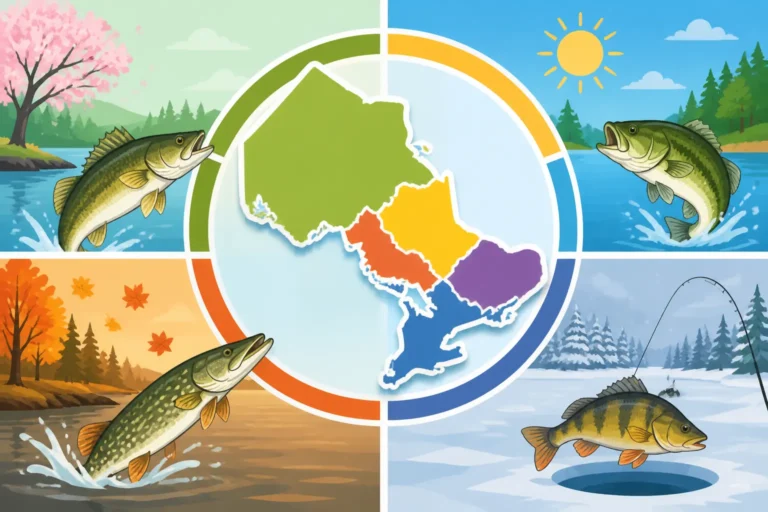
Walleye are constantly on the move, adapting to changing water temperatures, forage availability, and spawning cycles. What works in spring won't necessarily work in mid-summer, so being adaptable with your techniques is crucial. Let's break down the seasonal strategies that consistently put walleye in the boat.
Spring: The Walleye Opener and Beyond
Spring is a time of anticipation for many Ontario anglers, eagerly awaiting the walleye opener, which varies by Ontario Walleye Opener Dates by Zone. Immediately after ice-out and through the spawning period, walleye are often concentrated in shallower areas, especially those with current or hard bottoms, as they prepare to spawn. During this pre-spawn phase, they can be quite aggressive, feeding heavily to build energy reserves. Jigs tipped with soft plastics or live minnows are highly effective, cast and slowly retrieved along transition areas or vertically jigged in deeper pools of rivers.
As the water warms and the spawn concludes, walleye enter the post-spawn phase. They'll be recovering, often staging in slightly deeper water adjacent to their spawning grounds before dispersing to their summer feeding areas. This can be a challenging time, as their bite can be light. Slow presentations are key. Try slow-trolling shallow-running crankbaits or even drifting live bait rigs with a minnow or a half nightcrawler. On some larger lakes, casting lipless crankbaits or shallow diving crankbaits in bays and along warming shorelines can be productive as walleye chase schooling baitfish. Don't be afraid to experiment with different speeds and depths, as their activity levels can change quickly.
Summer: Deep Water and Night Fishing Tactics
When summer hits, especially in the dog days of July and August, walleye often retreat to deeper, cooler water. This is when understanding structure and your electronics becomes paramount. Look for them on deep humps, along thermoclines, on main lake points that extend into deeper water, or suspended over open water chasing schools of baitfish. Trolling is a hugely popular and effective technique in summer, allowing you to cover vast amounts of water and present baits at precise depths. Using planer boards can help spread out your lines and cover even more water, especially on larger lakes like Lake Erie or Lake Simcoe.
Vertical jigging spoons or blade baits over deep structure can also trigger bites from reluctant walleye. Drop your lure right down to the marked fish, jig it aggressively, and then let it sit briefly before jigging again. Night fishing for walleye also becomes incredibly popular and productive in summer. As the sun sets, walleye often move into shallower areas to feed under the cover of darkness. Casting shallow-running crankbaits (like a Rapala Original Floater or Smithwick Rogue) in traditional 'daytime' shallow spots like rocky points or weed edges can yield excellent results. Glow-in-the-dark jigs tipped with worms can also be deadly when fished under dock lights or around shallow structure.
Fall: Feeding Frenzies and Transition Zones
Fall is arguably one of the best times to target trophy walleye in Ontario. As water temperatures drop, walleye sense the approaching winter and embark on a serious feeding binge, bulking up on forage before the ice sets in. They become incredibly aggressive and will readily chase down larger baits. Look for them moving shallower than in summer, often congregating in transition areas between deep summer haunts and shallower fall feeding grounds. Large rocky points, expansive flats with scattered weeds, and river mouths are all prime locations.
Trolling larger crankbaits (think bigger Rapalas, Bandits, or Reef Runners) becomes incredibly effective, often at faster speeds, as walleye are willing to exert more energy to chase down a meal. Experiment with various sizes and colours until you find the hot pattern. Jigging with larger soft plastics or blade baits also shines in the fall, particularly when you locate schools of fish on your electronics. In rivers, current seams and deeper holes near spawning areas will start to hold staging fish. Don't be afraid to fish into late fall, even when air temperatures are chilly, as some of the biggest walleye of the year are caught just before freeze-up.
Winter: Ice Fishing for Walleye
When the lakes freeze over, the walleye action doesn't stop; it just moves beneath a different kind of surface. Ice fishing for walleye is a beloved winter pastime in Ontario, offering a unique challenge and the promise of a fresh fish dinner. As ice forms, walleye generally remain active, though their metabolism slows down. They'll often be found near structure like humps, points, and drop-offs, especially those with access to deeper water where they can retreat if necessary. Early ice and late ice typically offer the most aggressive bites.
Jigging spoons (such as Northland Buck-Shot Rattle Spoons or Lindy Rattl'n Flyers) are incredibly effective, often tipped with a minnow head or a small piece of bait. Vary your jigging retrieve from aggressive snaps to subtle quivers to entice a strike. Deadsticking a live minnow under a tip-up or a second rod (where regulations allow) is another highly productive technique; the live minnow acts as a beacon, drawing walleye in. Look for areas where there's current, even subtle currents under the ice, as these areas often bring in more oxygen and attract baitfish. Remember to check local ice conditions and always prioritize safety on the ice. Understanding Ontario Northern Pike Winter Season in FMZ 20 can offer insights into how other predatory fish behave during the ice season, providing clues for walleye.
Key Ontario Walleye Fishing Locations
Ontario is truly a walleye angler's paradise, boasting an incredible diversity of waters that hold healthy populations of these coveted fish. From the massive Great Lakes to countless inland gems, there's a walleye adventure waiting for everyone.
Great Lakes and Major Lake Systems
When it comes to sheer numbers and potential for trophy walleye, the Great Lakes and their connecting waters are tough to beat. Lake Erie, in particular, is often hailed as the "Walleye Capital of the World," offering phenomenal fishing from spring through fall. The shallow western basin is a famous spawning ground, while the central and eastern basins provide vast trolling opportunities for migrating schools. Destinations like Port Colborne, Long Point, and Wheatley are legendary. Anglers fishing Lake Erie Walleye Fishing often target fish suspended over open water or relating to subtle changes in bottom contour.
Beyond Lake Erie, other major lake systems like Lake Huron's Georgian Bay also offer excellent walleye fishing, though often in more rocky, complex terrain. Further north, massive waterbodies like Lake Nipissing are celebrated for their consistent walleye fisheries, providing both open water and structure-oriented opportunities. These large systems often require larger boats and specialized gear to safely and effectively cover water, but the rewards can be truly spectacular, with many anglers reporting catches of multiple large walleye in a single outing.
Inland Lakes and Rivers
While the Great Lakes grab a lot of headlines, Ontario's countless inland lakes and rivers provide equally thrilling walleye fishing, often with a more accessible, small-boat, or even shore-fishing experience. The Kawartha Lakes region, for example, offers a fantastic network of lakes connected by rivers, providing diverse habitats for walleye. Lakes like Rice Lake, Sturgeon Lake, and Pigeon Lake are well-known for their walleye populations, often found along weed lines, rocky points, and river channels. The French River, connecting Lake Nipissing to Georgian Bay, is another exceptional river system known for its robust walleye fishery, with fish often relating to current breaks, rapids, and deeper pools.
Many smaller, lesser-known inland lakes across Northern and Central Ontario also hold fantastic walleye. These can be incredible gems, offering less fishing pressure and a more serene angling experience. Often, these lakes require a bit more exploration, but local bait shops or provincial park staff can provide valuable insights. Targeting inlets and outlets of rivers, especially during cooler periods, can concentrate fish. The key is research – consulting local fishing reports, online forums, and topographical maps can help you uncover these hidden treasures. For a general overview, check out the Best Walleye Lakes in Ontario.
Remote and Northern Ontario Opportunities
For those seeking a true wilderness adventure, Northern Ontario offers some of the most pristine and productive walleye fishing experiences imaginable. Vast areas like the Sunset Country region, including the legendary Lake of the Woods, Rainy Lake, and Eagle Lake, are renowned for their abundant walleye populations and potential for giant fish. These sprawling bodies of water offer endless structure – islands, reefs, humps, and intricate shorelines – that hold walleye year-round.
Many remote fly-in fishing lodges in Northern Ontario cater specifically to walleye anglers, providing access to lakes with minimal pressure and often incredibly active fish. While these trips require more planning and investment, the experience of catching dozens of walleye a day in untouched wilderness is unparalleled. Even without a fly-in trip, numerous drive-to lodges and resorts offer access to fantastic Northern Ontario walleye lakes. These remote waters often hold larger average-sized fish and provide a sense of solitude that's hard to find closer to urban centers. Always ensure you understand Ontario Fishing Regulations Explained before venturing into these diverse management zones.
Reading the Water and Environmental Factors
Catching walleye isn't just about having the right gear or knowing a few hot spots; it's about understanding the subtle language of the water and how environmental factors influence fish behavior. Walleye are highly reactive to their surroundings, and learning to interpret these cues will make you a much more successful angler.
Water Temperature and Oxygen Levels
Water temperature is perhaps the most critical factor influencing walleye activity. As discussed, they have a preferred temperature range, typically most active between 10-21°C (50-70°F), though they can tolerate wider extremes. Knowing the current water temperature can help you pinpoint where fish are likely to be. In spring, they'll seek out warming shallow bays; in summer, they'll retreat to cooler depths or near thermoclines. A good boat-mounted temperature gauge or even a simple handheld thermometer is an invaluable tool.
Oxygen levels, while often overlooked by recreational anglers, also play a significant role. Walleye, like all fish, need oxygen to survive. In stagnant, warm water, oxygen can become depleted, especially in deeper zones during summer stratification. This forces fish to shallower, oxygen-rich areas, often near springs, current, or deeper weed lines. Conversely, highly oxygenated moving water, like river currents or wave-swept points, can be prime feeding grounds. Understanding how these factors interact will help you predict walleye locations, particularly in challenging conditions.
Weather Patterns and Barometric Pressure
Walleye are highly sensitive to changes in weather and, more specifically, barometric pressure. A stable or slowly falling barometric pressure often signals good fishing, as fish tend to be more active and willing to feed. This is typically associated with calm, overcast conditions or approaching low-pressure systems. Conversely, a rapidly falling or very low barometric pressure, often preceding or during a major storm, can make walleye difficult to catch, as they may become lethargic or move to deeper, more stable environments. A rapid rise in barometric pressure, often after a storm passes and high pressure moves in, can also make fishing tough, as fish often get a case of "lockjaw."
Cloud cover, wind, and even moon phase can also play a role. Overcast days often extend the walleye's preferred low-light feeding windows throughout the day, making mid-day fishing more productive. Wind can create current, stir up baitfish, and oxygenate the water, often triggering a bite, especially on wind-blown points or shorelines. However, too much wind can make boat control and fishing challenging. While moon phase effects are debated among anglers, some swear by certain moon phases for increased activity, particularly around full and new moons. Consider these factors when planning your outing and choosing your tactics; a major cold front, for instance, might mean scaling back to slower, finesse presentations rather than aggressive trolling. You might find it helpful to consult Best Time of Day to Catch Walleye to align your efforts with optimal conditions.
Understanding Forage and Baitfish Patterns
Ultimately, walleye go where the food is. Identifying the primary forage species in a given body of water is a huge step toward consistently catching walleye. In many Ontario lakes, yellow perch and various minnow species (like shiners) are key forage. In the Great Lakes, smelt and alewives can also be critical. If you can "match the hatch" by using lures that imitate the size, shape, and colour of the prevalent baitfish, you'll be ahead of the game.
Pay attention to baitfish schools on your sonar. If you see dense clouds of bait, walleye are likely not far behind. Observe how the baitfish are behaving: are they scattered, indicating less predator pressure, or are they tightly balled up, suggesting a predator is actively herding them? Walleye will often ambush baitfish from below or from the sides of structure. When fish are feeding on specific types of forage, they can become quite selective. For instance, if they're gorging on small perch, a perch-pattern crankbait or a jig tipped with a perch-imitating soft plastic will likely outperform other presentations. Sometimes, a single walleye will regurgitate its last meal in your livewell, offering a direct clue to what they're currently eating!
Ontario Walleye Regulations and Conservation
As anglers, we have a responsibility to not only enjoy the incredible fishing opportunities Ontario offers but also to protect them for future generations. Understanding and adhering to provincial fishing regulations is paramount to sustainable walleye populations.
Understanding Bag and Possession Limits
Ontario's fishing regulations are designed to manage fish populations and ensure their long-term health. For walleye, this primarily involves bag and possession limits, which vary significantly by Fisheries Management Zone (FMZ) and license type. A "bag limit" refers to the number of fish you can legally keep in a single day, while a "possession limit" is the total number of fish you can have in your possession at any given time, including those at your camp, vehicle, or home. These limits are set based on the health and productivity of the walleye fishery in each specific zone.
It's absolutely essential to consult the current Ontario Fishing Regulations Summary or the handy Fish ON-Line tool before you head out. These resources will detail the specific walleye limits for the FMZ you are fishing. For example, some zones might have a bag limit of 4 walleye for a Sport fishing license, while others might be 2. Always count your fish carefully, especially if you're keeping them for a meal. Keeping more than the legal limit can result in significant fines and penalties, and more importantly, it can negatively impact the walleye populations we all cherish.
Open Seasons and Slot Sizes
In addition to limits, walleye fishing in Ontario is subject to specific open seasons and, in many cases, "slot sizes." The open season dictates the dates during which you are legally allowed to fish for and retain walleye. These seasons are typically designed to protect walleye during their crucial spawning period, allowing them to reproduce undisturbed. As mentioned earlier, Ontario Fishing Season Dates by Zone are critical to know, and they can vary dramatically from one FMZ to another, often by several weeks.
Slot sizes are another important conservation tool. A "slot size" regulation means that you can only keep walleye that fall within a specific length range (e.g., only walleye between 18 and 22 inches). Fish smaller than the minimum size limit and larger than the maximum size limit must be immediately released. The purpose of slot sizes is often to protect the smaller, rapidly growing fish and the larger, sexually mature "spawner" fish that contribute significantly to the population's genetics and reproductive success. For example, the Ontario Walleye Daily Limit may include a slot size restriction. Carrying a measuring board or tape measure is therefore crucial when fishing for walleye in slot-regulated waters to ensure you are compliant.
Responsible Catch and Release Practices
While many anglers enjoy a delicious walleye dinner, practicing responsible catch and release is vital, especially for fish outside the legal harvest limits or when you've already met your bag limit. Properly handling a walleye you intend to release significantly increases its chances of survival.
Here are some key tips for ethical catch and release:
- Minimize Handling: Try to keep the fish in the water as much as possible. If you must remove it for a quick photo, do so gently and quickly.
- Wet Hands: Always wet your hands before touching a fish to avoid removing its protective slime coat, which guards against disease.
- Use a Net: A large, rubberized landing net is ideal for safely bringing a walleye aboard and can help you keep the fish subdued while removing the hook. Avoid nets with knotty mesh, which can damage fins and scales. You can find excellent landing nets on Amazon.
- Quick Hook Removal: Use needle-nose pliers or forceps to quickly and carefully remove hooks. If the fish is deeply hooked, it may be best to cut the line as close to the hook as possible, as attempting to extract it could cause more harm.
- Support the Fish: When holding a walleye for a photo, support its body horizontally. Never hold a large walleye vertically by the jaw or gills, as this can damage its internal organs and spine.
- Revive Gently: If a fish appears stressed or sluggish after release, gently hold it upright in the water, facing into the current, until it regains its strength and swims away on its own.
By following these practices and being mindful of regulations, we can all contribute to healthy, thriving walleye fisheries across Ontario for generations to come. Remember that knowing Ontario Sport vs Conservation Fishing License differences can also impact your catch and possession limits, so choose wisely based on your intentions.
Disclaimer
The information provided in this guide is for general informational purposes only and is subject to change. Fishing regulations, season dates, and limits are determined by the Ontario Ministry of Natural Resources and Forestry (MNRF) and can vary by Fisheries Management Zone and year. Always consult the official Ontario Fishing Regulations Summary or the Fish ON-Line tool for the most current and accurate information before fishing. It is the angler's responsibility to know and comply with all applicable regulations.