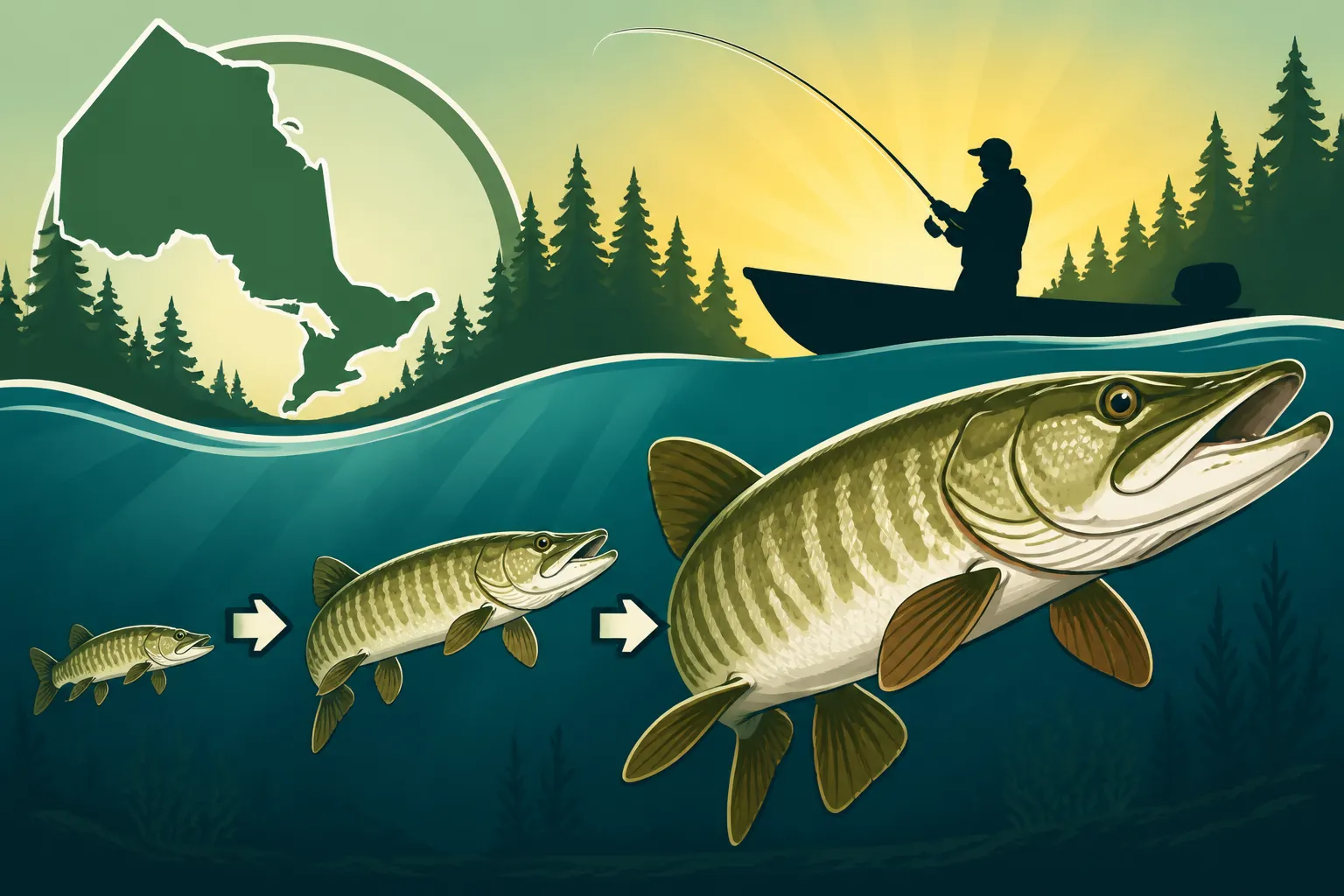
Muskellunge Growth Rate to Trophy Size
It’s a dream shared by many an angler, the pursuit of that elusive, massive muskellunge – the "fish of 10,000 casts." We hear whispers of 50-inchers, tales of incredible giants that patrol Ontario's legendary waters, and it leaves us wondering: how long does it really take for these magnificent predators to grow to such awe-inspiring dimensions? This comprehensive guide will peel back the mystery, exploring the intricate factors that dictate a muskie's journey from a tiny fry to a potential trophy, right here in Ontario.
Understanding the Intricacies of Muskie Growth
Muskellunge are enigmatic, and their growth isn't a simple, linear process. Anglers often wonder why some lakes consistently produce giants while others, seemingly similar, do not. It's a complex dance of various environmental and biological factors, each playing a critical role in how quickly these fish mature and how large they ultimately become. This section will delve into the primary elements that dictate a muskellunge's journey from a tiny fry to a potential behemoth of the depths.
Genetic Blueprint and Dietary Demands
Just like us, muskie have a genetic predisposition for growth. Some individual fish, by virtue of their genes, are simply built to grow larger and faster than others. This inherent potential is then heavily influenced by their diet. Muskie are apex predators, and their growth is directly tied to the abundance and quality of their food source. Think about a lake teeming with prolific baitfish like cisco, perch, and suckers – these waters provide a readily available buffet that fuels rapid growth. Conversely, lakes with sparse forage will see slower-growing muskie, even if their genetic potential is high.
The energy expended to hunt versus the caloric intake from the prey is a delicate balance. A muskie that expends too much energy for too little reward will not pack on the pounds efficiently. Young muskie start on smaller insects and crustaceans, quickly graduating to small fish. As they grow, their diet shifts to larger prey, often including smaller game fish like suckers, whitefish, or even smaller pike. A varied and abundant diet of nutrient-rich forage is absolutely crucial for them to reach impressive lengths and girths.
The Impact of Habitat and Water Quality
Beyond food, the environment itself is a huge determinant of muskie growth. A stable, healthy ecosystem provides the ideal conditions for muskie to thrive. This includes factors like water temperature, oxygen levels, and the presence of suitable structure for ambush and refuge. Muskie prefer clear to moderately stained water with plenty of weed beds, rock reefs, and submerged timber. These features offer both hunting grounds and protection from larger predators (especially when they're young).
Cold, clear lakes might produce larger, older fish, but their growth rate can be slower compared to warmer, more fertile systems that boast higher metabolic rates and faster growth for both muskie and their prey. Water quality – meaning low pollution levels and stable pH – is also paramount. Poor water quality stresses fish, making them more susceptible to disease and inhibiting their ability to grow. For instance, in areas like the French River, where the habitat is diverse and rich, muskie can find ample opportunities to grow. French River Fishing Guide
The Muskie Lifecycle: Age and Size Milestones
Tracing the growth of a muskellunge is a fascinating study, often requiring diligent observation and scientific tracking. These fish are not only long-lived but also experience different growth phases throughout their lives. Understanding these milestones helps us appreciate the journey a muskie takes to become the powerful predator we admire. It also gives us a clearer picture of how long it truly takes for a "trophy" fish to develop.
From Fry to Juvenile: The Foundation Years
Muskellunge begin their lives as tiny, vulnerable fry, hatching from eggs laid in shallow, vegetated areas, typically in late spring. Their first year is critical. They grow remarkably fast initially, driven by instinct to consume as much as possible to survive. Within a few months, they can reach lengths of 6-10 inches, quickly transitioning from feeding on plankton and aquatic insects to small baitfish. This initial burst of growth is vital, setting the stage for their future development.
However, survival rates are low during these early stages due to predation from other fish, birds, and even larger muskie. The competition for food can also be intense. Those that make it through their first year have proven their ability to find food and evade danger, laying a strong foundation for continued growth. It's a tough world out there for a baby muskie, and only the fittest survive this initial gauntlet.
Adolescent Growth Spurts: Reaching Mid-Size
Once past their vulnerable fry stage, muskie enter a period of consistent, often rapid, growth. Over the next several years, they will steadily increase in length and girth, becoming more efficient predators. During this adolescent phase, roughly from ages 2 to 6, a muskie might add several inches per year, especially in waters with abundant forage. It's during this time that they start to develop their distinctive markings and become formidable, if not yet massive, fish.
Many anglers will encounter muskie in the 25-40 inch range during these years. These are healthy, active fish, actively hunting and refining their predatory skills. They're still learning the nuances of their environment and reacting aggressively to lures. The amount of available prey and the lake's overall productivity greatly influence the pace of this growth. Lakes with stable baitfish populations tend to foster faster-growing adolescents.
Mature Adulthood: The Quest for Length and Girth
The real quest for "trophy" size begins as muskie enter mature adulthood, typically around ages 7-10 and beyond. At this stage, their growth in length might slow slightly, but their focus shifts to packing on weight and girth. A 40-inch muskie can still be relatively slender, but a 50-inch fish will almost always have considerable bulk, often resembling a "football" in shape. These older, larger fish are often the most cunning, having survived numerous encounters with anglers and other predators.
They learn to be more efficient hunters, targeting larger, more caloric meals, and often become quite territorial. It's not uncommon for muskie in optimal environments to live 15-20 years, with some rare individuals reaching even older ages. The continuous availability of large prey is key during this phase. If a big muskie finds a consistent source of larger fish, like good-sized suckers or whitefish, its growth will continue to impress. Muskellunge Habits in Georgian Bay
Defining and Reaching Trophy Muskie Status in Ontario
The term "trophy muskie" holds a special place in the heart of any angler targeting these magnificent fish. But what exactly constitutes a trophy in Ontario waters? It’s not just about an arbitrary number; it’s about the culmination of years of growth, survival, and favorable conditions. Landing one is a monumental achievement, a testament to patience and persistence.
What is Considered a "Trophy" Muskie in Ontario?
While the definition can vary slightly from angler to angler, in Ontario, a muskie generally enters "trophy" territory once it reaches or exceeds the 50-inch mark. Many dedicated muskie anglers have their sights set on a "50-incher" as a true benchmark of success. Anything over 50 inches is truly a fish of a lifetime for most. These are the giants that stories are made of, fish that have commanded their environment for well over a decade, sometimes two.
Reaching this size implies exceptional growth, an excellent forage base, and the fish's ability to evade capture for a very long time. Occasionally, you'll hear about fish pushing into the mid-50s or even touching 60 inches – these are true unicorns and are exceedingly rare, requiring decades of life and perfect conditions. The pursuit of these massive fish is what drives many anglers back to the water year after year.
Prime Ontario Waters for Giant Muskie
Not all muskie waters are created equal when it comes to producing giants. Certain lakes and rivers in Ontario have a well-deserved reputation for consistently kicking out trophy-sized muskellunge. These waters typically share common characteristics: a healthy, diverse, and abundant forage base, vast expanses of ideal habitat, and often, strong conservation ethics among local anglers.
Lakes like Lake St. Clair, Georgian Bay, Lake of the Woods, and the Kawartha Lakes system are frequently cited as top destinations for trophy muskie. These systems provide the space, the food, and the cover these fish need to grow to their maximum potential. Best Muskie Waters in Ontario The sheer size of some of these bodies of water means there are ample undisturbed areas where muskie can live out their long lives without constant pressure. Anglers often spend years, even decades, learning the nuances of these specific waters to increase their chances of hooking into a true giant.
The Critical Role of Catch and Release
Given how long it takes for a muskie to reach trophy size – sometimes 15-20 years or more – catch and release is absolutely paramount for maintaining and improving trophy fisheries in Ontario. Every muskie caught, especially a large one, represents an invaluable genetic resource and a long-term investment in the fishery. By safely releasing these fish, anglers ensure they can continue to grow, spawn, and contribute to the population for future generations.
Proper handling techniques are essential to ensure the fish's survival after release. This includes minimizing fight time, using large, rubberized landing nets or cradle nets (often available for purchase through retailers like Amazon), keeping the fish in the water as much as possible for unhooking and photos, and using specialized tools like long-nosed pliers or jaw spreaders. Many guides and experienced anglers on prominent muskie waters rigorously practice and advocate for catch and release to protect these precious fish. Muskie catch and release survival tips
Conservation and Sustainable Growth for Muskellunge
The sustained health of Ontario's muskellunge populations, particularly the opportunity to encounter trophy fish, hinges entirely on effective conservation strategies. These majestic fish are not only an ecological keystone species in their habitats but also a prized angling target, making their management a complex but crucial task. Understanding the regulations and the reasons behind them is key to ensuring that muskie continue to thrive for years to come.
Protecting the Giants: Regulations and Slot Limits
Ontario has implemented specific regulations designed to protect muskie and foster the growth of large fish. These often include size limits (minimum length requirements) and sometimes slot limits, which allow anglers to keep fish within a certain size range while protecting both smaller, immature fish and the largest, most valuable breeders. For example, a regulation might state a minimum size of 44 inches. This means any muskie caught under that length must be immediately released.
The purpose is clear: to allow muskie to reach sexual maturity and spawn multiple times before they can be harvested, thereby contributing significantly to future generations. These regulations are meticulously crafted based on scientific data for different fisheries management zones (FMZs) across the province. Muskellunge Season Dates and Limits It's absolutely critical for every angler to consult the current Ontario Fishing Regulations Summary before heading out, as rules can change and vary significantly by zone.
The Importance of Habitat Preservation and Water Management
Beyond direct fishing regulations, the long-term growth and sustainability of muskie populations depend heavily on broader environmental stewardship. Habitat preservation is paramount. Muskie rely on healthy, diverse aquatic environments for spawning, feeding, and shelter. This means protecting wetlands, controlling shoreline development, and preventing pollution.
Projects aimed at improving water quality, restoring natural shorelines, and managing water levels thoughtfully all contribute to a robust muskie ecosystem. When their natural habitat is degraded, muskie populations suffer, and the chances of them reaching trophy size diminish significantly. Sustainable water management practices are also crucial, particularly in river systems where flow rates and water temperatures can be influenced by human activity. Anglers and conservation groups often work together to advocate for policies that protect these vital aquatic environments, recognizing that the health of the habitat is directly linked to the health of the fish.
Debunking Muskie Growth Myths and Common Misconceptions
There's a lot of lore and anecdotal evidence surrounding muskellunge, especially concerning their growth. While some of these stories are entertaining, many are simply untrue and can lead to misunderstandings about how these fish actually develop. Separating fact from fiction is essential for both effective angling and sound conservation. Let's tackle some of the common myths head-on.
Slow vs. Fast Growth: It's Not Always What You Think
One persistent myth is that muskie are inherently slow-growing fish across the board. While it's true they are long-lived and take many years to reach immense sizes, their rate of growth can vary dramatically. In highly productive, warmer waters with an abundant and readily available forage base, muskie can grow surprisingly fast in their early and adolescent years, sometimes adding 4-6 inches annually.
Conversely, in colder, less fertile northern lakes, their growth can be considerably slower, perhaps only 1-2 inches per year. The average size and growth rate are thus highly dependent on the specific body of water. So, while a 50-inch muskie is always an old fish, its journey to that size might have been a bit quicker in Lake St. Clair than it would be in a remote northern Canadian Shield lake. Understanding this variability helps anglers adjust their expectations for different fishing locations and underscores why some lakes are renowned for their "fast growers."
The "Stunted" Population Fallacy
Another common misconception is the idea of "stunted" muskie populations. This often arises when anglers catch numerous smaller muskie in a particular body of water and assume the fish aren't growing large. While it's certainly possible for a lake to have a less-than-ideal forage base, more often than not, what's perceived as a "stunted" population is simply a healthy distribution of various age classes, or perhaps a lake where recruitment is very strong.
You're catching the younger, more abundant fish, while the larger, older individuals are simply harder to find and catch. Muskie are highly migratory within their home waters and can be incredibly elusive. A lake with a high density of mid-sized muskie often indicates a thriving population, and if the forage and habitat are suitable, there are likely larger fish present that are just more challenging to locate. It’s also important to remember that not every muskie born will reach trophy status; mortality naturally culls weaker or less efficient fish throughout their lives. So, those 35-inchers might just be well on their way, given time and luck.
Practical Implications for the Ontario Muskie Angler
Understanding muskie growth rates and the factors influencing them isn't just academic – it has real-world implications for how we approach muskie fishing in Ontario. It shapes our expectations, guides our techniques, and reinforces the importance of responsible angling practices. For those chasing the fish of 10,000 casts, this knowledge is power. Muskellunge Fishing in Ontario
Targeting Specific Age Classes and Sizes
Knowing about growth rates can help you refine your angling strategy. If you're primarily interested in catching numbers of aggressive, mid-sized muskie, you might focus on waters known for good recruitment and healthy populations of younger fish. These fish often respond well to a wider variety of baits and presentations. If, however, your true passion lies in the pursuit of a giant, then your focus shifts dramatically.
You'll seek out those prime trophy waters – places like Lake St. Clair or specific sections of Georgian Bay, where How big muskie get in Georgian Bay is a common question – and employ tactics geared towards older, more cautious fish. This means larger baits, sometimes slower presentations, and spending more time targeting specific big-fish structures like deep weed edges or prominent rock reefs. Gear also comes into play; using heavier rods, reels, and lines is essential for battling these mature giants effectively. A heavy-duty muskie rod, for example, can be sourced through retailers like Amazon, ensuring you have the right tools for the job. Best Muskie Gear for Ontario Waters Consider researching Best Lures for Muskie Fishing in Ontario to match the prey of these larger fish.
The Ethics of Patience and Responsible Angling
The lengthy growth period of muskellunge underscores the deep ethical responsibility we have as anglers. Every muskie takes years, sometimes decades, to reach a significant size. This means that every large muskie caught and released is a triumph for conservation. Impatient anglers who keep muskie under regulations or handle them improperly deplete the very resource they cherish.
Proper catch-and-release techniques, minimal handling, and understanding the stress fish endure during a fight are not optional; they are essential. It's about respecting the fish and its incredible journey, and understanding the vital role they play in the ecosystem. Furthermore, supporting conservation initiatives and adhering strictly to regulations, including Ontario Bag and Possession Limits by Species, helps ensure that these incredible fish continue to inspire awe and challenge anglers for generations to come. The future of trophy muskie fishing in Ontario literally rests in our hands, whether it's Best techniques for fall muskie fishing or ice-out strategies. It's also worth noting the difference in growth and size between muskie and their close cousins. Do Muskie Get Bigger Than Northern Pike?
Here's a table comparing potential growth rates in different Ontario muskie habitats, illustrating the variability you can expect:
| Growth Factor | Northern Shield Lakes (e.g., Lake Nipigon) | Southern Great Lakes Tributaries (e.g., Lake St. Clair) | Mid-Latitude Inland Lakes (e.g., Kawartha Lakes) |
|---|---|---|---|
| Water Temperature | Colder, shorter growing season | Warmer, longer growing season | Moderate, decent growing season |
| Forage Abundance | Good, but often less diverse/dense | Excellent, highly diverse and abundant | Good, varied prey |
| Growth Rate (Annual Inches) | 1-2 inches/year (post-juvenile) | 3-5 inches/year (post-juvenile) | 2-4 inches/year (post-juvenile) |
| Age to 40 inches | 8-12 years | 4-7 years | 6-10 years |
| Age to 50 inches+ | 15-25+ years | 10-18+ years | 12-20+ years |
| Trophy Potential | Large, but fewer truly giant individuals | High, consistently produces giants | Good, produces respectable trophies |
Disclaimer
This article is for general informational purposes only and does not constitute professional advice. Laws, prices and regulations vary by location and change over time. Consult a qualified professional for guidance on your specific situation.